
10 Questions for Bijaan Noormohamed
This county town’s famine is faraway, and mooring here is so miserable. The
mountains advance from the south, the Yangtze’s gurgle carries up northward.
—from 峡江县 (XIAJIANG COUNTY) and 黄金洲 (GOLDEN ISLAND), poems by Zhang Xun, translated by Bijaan Noormohamed (Volume 65, issue 3)
Tell us about one of the first pieces you translated.
An age-old classic for Chinese literary scholars: translation of Laozi’s Daodejing. Deceptively short, this seminal work has gained significant attention precisely for its ‘un-translatability’; translations into English conceive 道 as entity ranging from ‘God’ and ‘Ineffable’ to ‘The Flow.’ My translation of the Daodejing rightfully failed to capture the ‘intent’ or ‘essence’ (inherently problematic terms rife in translation studies) of the original, but exceeded in its pedagogical capabilities, for it introduced me to the complex considerations that must be undertaken by the translator as they translate out of the source, and into the receiving. What is that process like? Does the receiving language stand to gain in translation, as the German philosopher Schleiermacher posited? Or, at the site of translation, is too much negotiated away and lost? So now when I translate today, I keep these questions top of mind as I navigate the aesthetics before me.
What writers or works have influenced the way you write now?
I owe much of my thanks to the twentieth century Chinese intellectual Lu Xun, whose thoughtful construction of sentences in the baihua vernacular informed me of the great power of concise, yet highly meaningful prose. In my role as a translator, I keep Lu Xun in mind as I try and share the same novelty, intrigue, and joy of his thoughtful Chinese workmanships to an English-speaking audience. Otherwise, I’m grateful to the American modernist poet Marianne Moore, particularly her “Steeple-Jack” poem, for her thoughtful ekphrasis and rendition of a beautiful, tranquil scene (adapting from Dürer).
What drew you to write a translation of this piece in particular?
I chose Zhang Xun’s 峡江县 (Xiajiang County) and 黄金洲 (Golden Island) for their rich, vivid description of nature, alongside the covert political tensions that lurk beneath the façade of tranquility. “Flying ten steps to stay,” as I translate, can feel strange for us Anglophones. It is not something we are used to reading in poetry, after all; perhaps, this phrase ‘identifies’ the piece as translation. By specifically giving attention to a line a reader may have glossed over otherwise, I invite the audience to question why Zhang Xun felt that way: trapped, for instance, by the Qing courts, even as he sought to advocate for reform. One can imagine a lonely poet facing the beautiful sights of a ‘golden island’ or willow-reeds in a lush field, at once feeling free through nature, but also trapped terrestrially due to his mortal conscience.
Is there a city or place, real or imagined, that influences your writing?
I often like to imagine what Beijing was like during the years of the Republic, specifically amongst important intellectual circles (Lu Xun, Hu Shih, Xie Bingying, Feng Youlan) as they debated important topics paramount in deciding China’s future: feminism, the vernacular language, the influence of Western culture, Marxism. I like to imagine myself as an observer in Laoshe’s Chaguan (Teahouse—a 1957 play), observing the transition of China from the Qing to the early days of the Communists.
Is there any specific music that aids you through the writing or editing process?
Not specific music, but a bit of Shostakovich can go a long way whenever I feel a dramatic impulse come over me. Sometimes, also, listening to sounds of the specific natural phenomena I seek to render in my translations (whether a waterfall, wind blowing, etc.) can help me to better orient myself vis-à-vis the original author’s interiority.
Do you have any rituals or traditions that you do in order to write?
Tea. Lots of it. Black, green, pu’er, longjing. Anything. Something to sip on whilst translating, particularly in those moments where you take a step back from your laptop, and read over your recently translated lines, is incredibly helpful in grounding myself and providing a bit of ‘calm’ to weather the complexities of translation.
Who typically gets the first read of your work?
I’m lucky to have a supportive, caring group of mentors, colleagues, and friends who have supported me thus far. In fact, every piece I’ve published has had a different first reader—I like to keep it fresh that way, seeing what insights I can glean from my audience, whether a first-time reader of anything ‘Chinese’ or an erudite scholar. In no particular order I thank Martin Kern, Jenny McPhee, Xiaoyu Xia, Luanfeng Huang, Yixin Xu, Hanna Leliv, Lauren Brozovich, Christina Li, Noah Dorn, and Aarya Kumar.
If you could work in another art form what would it be?
I’d paint. There’s something so similar to seeing a blank WordDoc in front of you, waiting for you to write, as there is a blank canvas, yearning for its painter to add paint to it as they see fit. I borrow from the Nietzschean notion of ‘value-creation’ here: painting transforms an otherwise blank, dull canvas into the epicenter of ‘original’ meaning. There’s also something liberating I find about making mistakes whilst painting. When writing, to delete a sentence, word, etc., one simply can ‘erase’ or click the ‘delete’ button, and that history is lost. But in painting, one can simply paint on top of the mistake, or work it into the larger symbolic impression of the piece. Mistakes, of course, are inevitable for all of us, but I find real beauty in being able to work with them, and produce ‘something’ that narrates the process of getting there.
What are you working on currently?
It’s a secret! Just kidding. I’m working on a re-translation of Lu Xun’s “Regret for the Past” in (informal) collaboration with some colleagues at Princeton. Published in 1925, this short story tells the tale of a ‘performative’ (in the contemporary sense) male, Juansheng, advocating for feminism & liberalism until crisis strikes him and his girlfriend, Zijun, who he subsequently breaks up with for he cannot handle the gravity of the situation. Current translations in the English market fail to capture the dramatic irony of Lu Xun’s prose, rather preferring to tell a romantic novella rife with hyperbole and exaggeration. As cliché as it may be, I intend for this translation to be one ‘for our times,’ as it is highly relatable to us all in our pursuits of love …
What are you reading right now?
I’m currently reading through Homi Bhabha’s Location of Culture, a seminal post-colonial text that introduces the concept of the ‘Third Space.’ Specifically, I seek to apply this logic to decolonizing translation studies generally; if the ‘third space’ of translation is nothing more than the intermediary between the ‘host’ and ‘target’ language ‘nodes,’ then is translation nothing more than a site of linguistic negotiation, as Lydia Liu questions? What must be sacrificied in translation, what is there to be gained? As an economist by training, I find such a schema intriguing; after all, it reminds me of a cost-benefit analysis, for which such a launchpad of discovery is apt.
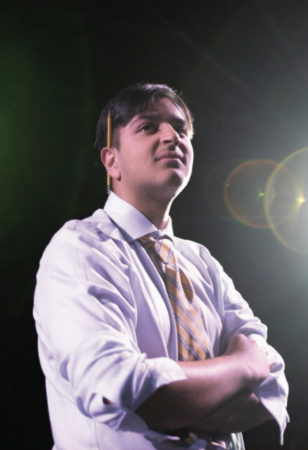
BIJAAN NOORMOHAMED is a poet and translator at Princeton University. He works on ancient Chinese translations of metaphysical and war poetry, particularly during the Tang-Song transition and the early Qing period. His translations and poetry have been featured in POETRY Magazine, the Oxonian Review, the Nashville Review, and The Marque.