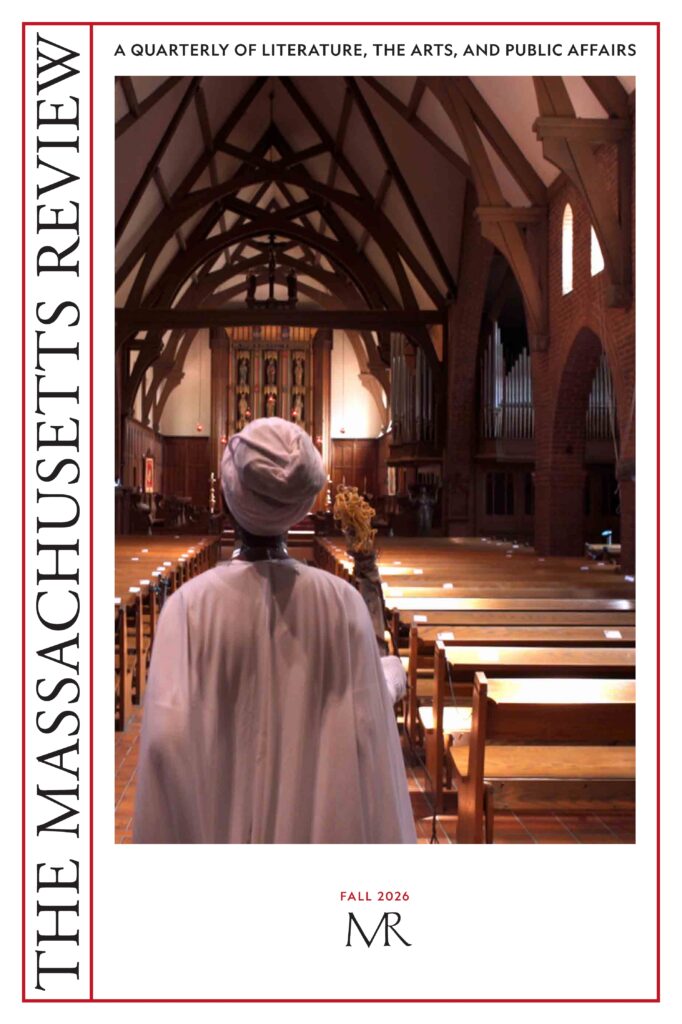

Interview with Edward Gunawan (Audio + Text)
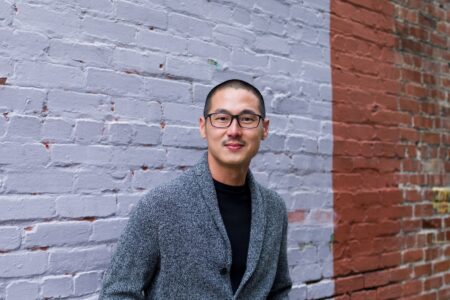
Photo credit: Sarah Deragon
Note: This is an edited transcription of an interview conducted over Zoom. The full interview, featuring more in-depth answers and back-and-forths, is available below. Gunawan reads the poem “Go Back Home” from 14:45–16:25.
Tell us about your relationship to translation.
My God, where do I start? I feel like I’ve always been translating: I was born in Indonesia, but my family is Chinese in ethnicity, and we speak Chinese and Hokkien (dialect) at home. I also grew up studying in a Christian missionary school, so I felt like I’ve always been translating from one culture to the other, one language to another. As an adult, I have to often navigate or negotiate the world for my parents, who don’t speak as much English.
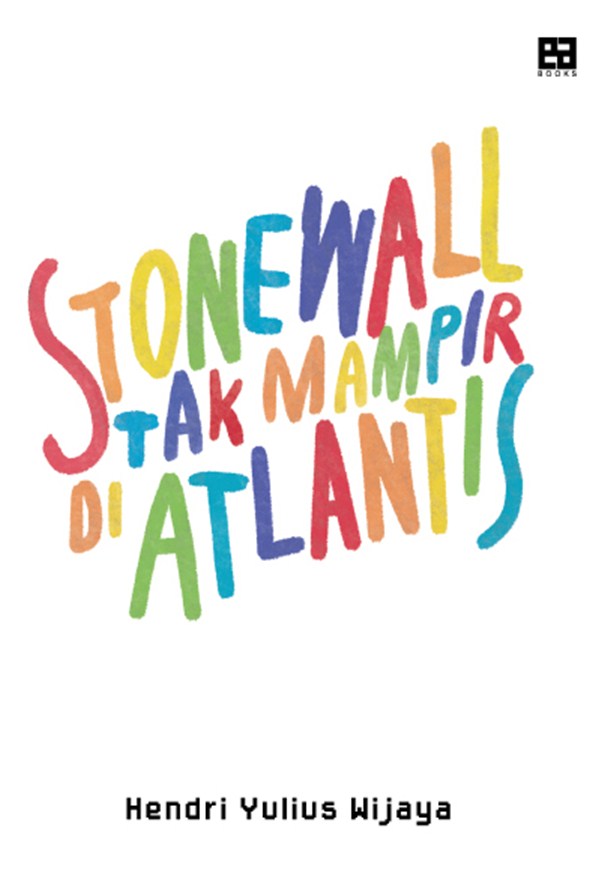
Formally, I started translating only a few years ago when I did my MFA. I made a conscious decision to do some translating for queer literature from Indonesia: I found out that Indonesia is the fourth most populous country in the world, with 280 million people, but there were only a handful of out queer writers writing in Indonesian. I thought it was really important for me to do something to contribute. I was very intentional in seeking out queer literature from Indonesia, and one of the pieces that I came across was Hendri Yulius Wijaya’s collection, Stonewall Tak Mampir Di Atlantis (There’s No Stonewall in Atlantis). I found the collection to be very smart, but also very personal. It talks about queer intersectionality outside of the typical [discourse of] race and ethnicity, but also through nationality and socio-economics, which I feel doesn’t get covered a lot in in western discourse of queer intersectionality, or in places like Asia or Indonesia where there is a lot of anti-LBTQ+ sentiments. (The “Atlantis” in the title, actually, refers to a gay sauna in Indonesia that was raided, and the men who were arrested there were publicly shamed in the media. This collection was a response to that.)
How was the process of translating Wijaya?
He’s been really open and very trusting from the get-go. I was very surprised, because I actually didn’t have any translation samples when I approached him. . . I was like, “Hey, I’m writer, starting to translate. Would you be interested?” And he was like, “Oh, yeah, sure.” We didn’t immediately jump into having an official working relationship, and it actually took me a while—I think maybe a year—from when I first approached him to showing something to him. He was very patient.
You had told me previously about the oral subsect of Indonesian language “Bahasa Binan.” Will you talk a little about how this language appears in either “Go Back Home” or the full-length collection, There’s No Stonewall in Atlantis? How did the knowledge of Bahasa Binan affect your translation process?
“Binan” refers to the queer and trans community in Indonesia, so they’re collectively known as Binan. The language is a coded/uncoded language, oral . . . It is created by the community, spoken by the community, which intentionally prevents detection. It reminds me of how Pig Latin was used in queer vernacular English before, and of course, is very related to the queer ballroom scene and language. It also mimics the trajectory of that: queer ballroom language, and African American Vernacular English in general, has been used so much in social media that it’s been somewhat co opted. A lot of people know the language now in social media, and it’s written in social media [despite being an oral language]. Bahasa Binan is similar in that way, where, even though it starts as this oral language, people use it a lot in social media now, and so it gets written in that way; but there’s no formal spelling, no formal definitions of the words.
Even though the piece “Go Back Home” doesn’t have Binan words, Hendri uses Binan words in other pieces in the collection to convey this kind of very strange, very hard to penetrate community, because that language escapes the mainstream/general public’s comprehension in Indonesia. My challenge as a translator was debating whether to make this lack of transparency more obvious or not, or more intentional or not. And we went back and forth. Hendri and I had a very collaborative relationship. I tried one version where everything was not translated. The Bahasa Binan words were kept as is, and then I would have footnotes or end notes. There was another version where I translated everything into English. And another version where it’s not translated to English literally, but I tried to find equivalences—like from queer ballroom language, from American Vernacular English—to convey that this is a language that is a little bit different from the norm, or the mainstream use of Indonesian language. I feel we can say that now we’ve landed on this third option.
Do you have any non-literary hobbies?
Now that the weather is getting warmer again, I’ve been back into gardening. I really enjoy it. I started gardening during the pandemic (like a lot of people), but I kept it up and my plant collection has grown a lot! Actually—since we’re talking about writing and translation—there is some sort of an overlap between gardening, being in an almost caretaker role, and as a translator, assuming some of that role as well. You’re nurturing something, and it’s incredibly exciting when you watch it grow, obviously.
What’s your favorite plant from your garden?
A lot! Right now, probably the bird of paradise. Big beautiful leaves, bold flowers.
Is there another piece from the issue that you like, or which you think complements your poem?
Shira Erlichman’s “Nude IV.” Amazing poem. I feel like it’s in conversation with “Go Back Home,” the idea of almost being not visible and hyper visible at the same time. And I think perhaps people who are from marginalized identities or background can relate a lot to that experience, you know; the speakers of both poems in some ways have that desire of being seen, wanting to be seen, but then also, how to be seen, right? It’s not in the control of the speaker.
What are you working on right now?
“Stonewall” is getting published (Circumference Books) sometime next year, which will be my full-length translation debut. I’m also working on a new collection by another queer Indonesian author, but I can’t share too much yet because we’re not official. We’re in that space I mentioned earlier, where I’m testing his poems out—but it didn’t take me a year this time which is a good sign!
EDWARD GUNAWAN is a queer Indonesian-born Chinese writer and literary translator based in the San Francisco Bay Area, CA. Recipient of the Lunch Ticket’s Gabo Prize in Literary Translation and Multilingual Texts, Edward has authored two chapbooks—including the Start a Riot! Prize-winning The Way Back (Foglifter Press, 2022). They earned their Creative Writing MFA from San Francisco State University, where they received a Distinguished Graduate Achievement Award. Their work has appeared in Asymptote, Words Without Borders, and MAYDAY, among others. They will make their full-length translation debut with Wijaya’s Stonewall Tak Mampir di Atlantis [ There’s No Stonewall in Atlantis ], forthcoming from Circumference Books (USA). Visit addword.com for more.
IG: instagram.com/edward_gunawan