
Yes, You Can Go Home Again, But…

Review of Corinne Demas’s novel Daughters (Little A, New York, 2025)
Yes, you can go home again, but you might revert to the same person you were when you first decided to leave.
Corinne Demas’s novel Daughters is a compelling examination of a daughter’s long-held resentment and fear of disappointing a parent, and of a parent’s fear of losing her child’s love. Demas dramatizes moments of resistance across generations and leads us toward understanding how a family might begin to be freed from false ideas about the inner lives of other members. She also reveals that annoying habits may have their uses, and siblings can come in handy.
Meredith (sometimes referred to as Merry), a painter, suddenly arrives with her seven-year-old daughter, Eloise, at her mother Delia and stepfather Bob’s farm. She is taken in immediately and soon announces her intention to stay permanently. Her decision is met with joy by Delia and some consternation by Bob. Once ensconced at home on the farm, Meredith finds herself withdrawn and resentful. Her mother can’t stop worrying about her, and Meredith can’t stop being sullen, irritable, and easily offended. Meredith’s sniping is portrayed skillfully—as is the mother’s sense of helplessness.
Delia’s fear that Meredith may suddenly leave the farm derives from both her daughter’s previous behavior and a current threat. During one Christmas, “Delia had worked to recreate the kind of festivities she’d orchestrated when her children were little. ‘You always overdo things, Mom,’ was what Merry had said. ‘I’m outta here.’ At a much later point, when Delia asks what happened to make her leave her marriage, Meredith erupts: “I’m done talking about this. Done. Finis. I need to look after my own mental health. If you ask me about this again, I’m going to have to pack up and take Eloise and leave.” Delia instantly backs down and then makes the terrible mistake of taking an impulsive action that threatens her relationship with her daughter.
One of Demas’s achievements is her balance of sympathy: while we care for the daughter undergoing trauma, she also highlights the mother’s struggle. The mother suffers through a silence she cannot understand, as Meredith refuses to explain her return until near the end of the novel. Delia’s trial is to learn to respect her daughter’s privacy and not to intervene, no matter how much she believes she might be helpful.
Into this worrying prickliness comes Eloise, an inspired creation. Meredith’s daughter asks questions and breaks up the adults’ logjam of automatic responses, even softening the heart of Delia’s husband Bob. Her questions interrogate the family structure, forcing adults to pay attention and to watch their language.
The specter of abandonment erupts in Eloise’s voiced fears, which run throughout the novel. Appearing like ugly ghosts are memories of cruel or indifferent fathers. Eloise’s father had never wanted a child and readily foregoes custody. Delia’s father and her first husband similarly considered children annoying inconveniences. Initially, Delia’s husband, Bob, appears to share some of those attitudes, yet he supports Delia with reliable affection and learns to care for his wife’s children and her grandchild—although he often takes the opportunity to leave the room whenever tension arises, conscientiously or out of his own need for convenience.
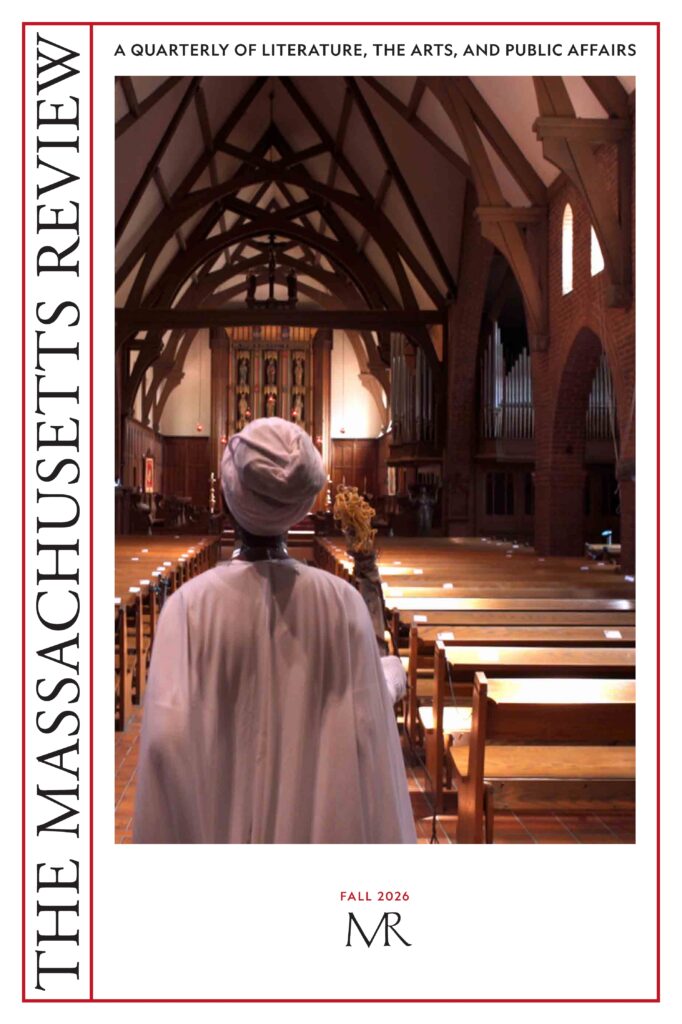
Ironically, in this complex novel of generational struggles, distance from others is exactly what Delia and Meredith may often need—time to themselves, away from others’ judgment and their own hectoring inner voices. Delia finds a moment of peace, soothing her fretting heart, while resting in a church: “In spite of being a house of a particular religious denomination, it maintained a dignified neutrality. It didn’t instruct you on what to think or what to believe. It was just a sanctuary that said: Rest here in this quiet, figure things out at your own speed, find peace from whatever is troubling you.” The scene is particularly telling: sanctuary and acceptance are exactly what her daughter wants as well.
In recent years, it’s not unusual to see adults moving home to live with their parents. In Meredith’s case, she plans to assist on the farm, tending the animals, and creating space in the barn for her art studio. But to make the situation work for all, unresolved issues need to be confronted. What else might help Meredith? An old love interest is still in the neighborhood.
Demas excels not only at portraying family disruption but at creating a bucolic atmosphere. Existing harmoniously on the farm are delightful animals—a horse, donkeys, and wildly enthusiastic dogs. Cleverly, the author seems to suggest that her characters could learn something from those animals: to relax a little.
What do we owe our parents, and what do our parents owe us as adults? Demas is working in subterranean territory, reflecting pain across generations in dialogue stitched with sorrow and misunderstandings. In this powerfully engaging novel, she gradually leads these generations toward new respect for one another and the reader toward sympathy for both sides of the volatile, electrically-charged mother-daughter bond.
LEE UPTON’s most recent novel is a work of speculative fiction, The Withers. She was named a semi-finalist for the 2026 Thurber Prize for American Humor for her comic novel Tabitha, Get Up. The sequel, Tabitha, Stay Up, is forthcoming in September 2026. A volume of her selected poems will be out in 2027 from Saturnalia Press.