
Where You Find It
Editor’s note: When invited to participate in our interview series, Mathew Magro-Fry (author of “The Missing Pieces” from our Summer 2026 issue) offered to write a creative nonfiction piece on the relationship between roadtrips and his writing process:
Just off the freeway between Palm Springs and San Bernardino, a Brontosaurus and a Tyrannosaurus rex loom tall in a gas station parking lot. The T. rex is anatomically incorrect and a little goofy: his snout is boxy and squashed, he is rotund not unlike a weiner dog on hind legs, and his arms are even punier than they should be. The Brontosaurus looks particularly depressed. She has been frowning for decades. I have met these two more times than I can count, because I have been on that stretch of road—coming, going—more times than I can count. I’ve met the dinosaurs in the rain, I’ve met them late at night, on cool mornings during hot summers, on Christmas Eve, Thanksgiving Day. They will be there when I am too old to make the drive to visit them—long after this, they will be there in that parking lot, off that interstate, in that desert.
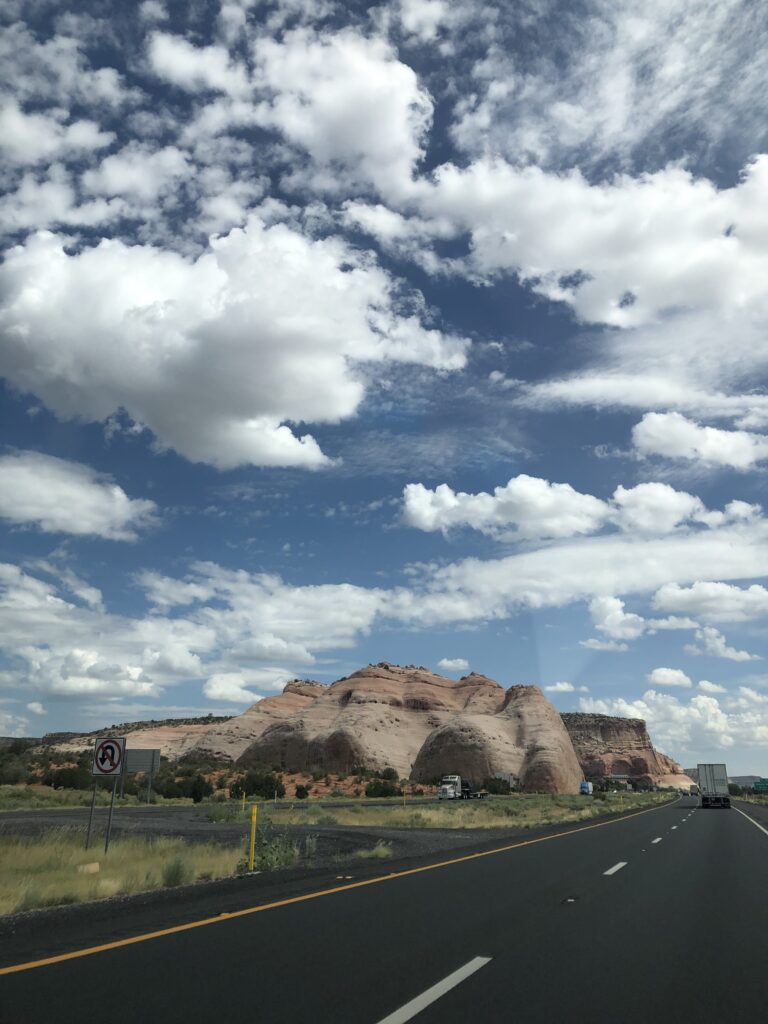
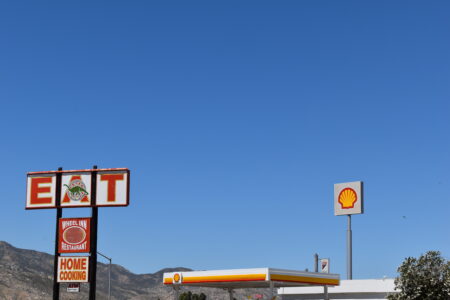
Tim O’Brien wrote, once, that you take your material where you find it. I wouldn’t have been older than one year the first time I drove (or, was driven) across the country. In the time since, I have spent an incredible portion of my life in the backseat of a car, or behind the wheel, or even in the bed of a truck. I’ve gone coast to coast, I’ve skipped from the Mid-Atlantic to the Midwest in a day, cut through nearly every fire road in the state of Arizona, crept through the midnight black forests in Appalachia. On the American highway, outside a car window, I’ve found that the world goes on forever. Sometimes that world is wide and flat and arid; or there are walls of thick, green trees; or acres of blackened and smoky land; or rolling hills covered in grass that ripples like water. Sometimes you find dinosaurs off the road, or biospheres, giant cans of chili, airplane graveyards, creationist museums, fields of dreams, or wooden sculptures of Sasquatch. What I’m driving at, here, is that I’ve found my material on the road.
The summer I graduated college, I took a temp job with the Arizona State Parks Department. They had me driving out to these little specks on the map to interview people who were camping or fishing or shooting guns or riding dirtbikes on protected land. Eagar, Mund’s Park, Bagdad, Big Horn, places with names like: Why. I was a city kid, born and raised in Phoenix, and I also had all the iconography of the State I could hold. The Great Seal of Arizona, emblazoned on my truck and my shirt and my hat and even the iPad I was meant to record these interviews with. I wasn’t the sort of person these people wanted to talk to. I began to take longer routes to my assignments, because I knew I wouldn’t be doing much but sitting around when I got there. I would drive all night through the backwoods, I’d sleep in the parking lots of scenic overlooks and Dollar Trees alike, I lived off of truck stop hot dogs and off-brand energy drinks, and I took detours into New Mexico, Colorado, and California, just because the road was there. It was a rough summer. They were paying me just enough to afford rent and not much more. Maybe partly out of desperation, I turned it into a time of exploration, both literally and spiritually. I was making it worth it; I was taking my material. When I think of who I am as a writer, I think of the twenty-one year old driving on too little sleep. We are both looking for something, and neither one of us knows what we’ll do when we find it.
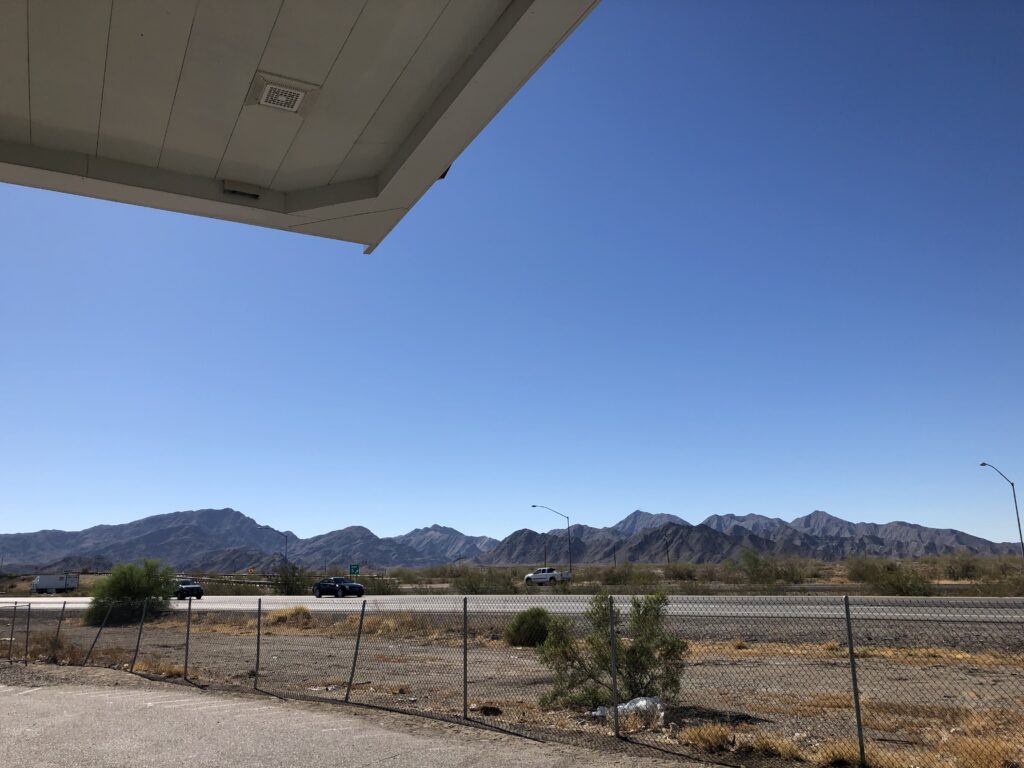
The discipline it takes to drive for many miles over many hours is very similar to that which is required to write many words. I’m not trying to be glib. Hitting dead ends, getting lost in the back roads, these are metaphors, but they are also literally things you will do when you write. You follow a road for as long as you can, you keep your eyes open, and you remember the weird stuff off the highway: the strangers you chatted with at the gas pump, the empty towns, the color of the sky at four in the morning, the static on the radio, the way the wind takes the wild grass at dawn. This becomes the well from which you draw—your material, in other words. Sift it for what you need. Stretch it if you must. If it pleases you, invent it, and then contextualize it in the reality you’ve created with the written word. The more material you gather—which is to say, the more life you live—the easier this becomes.
Some day, when I really am too old to visit those dinosaurs in that parking lot, I will always have them—a version of them. They are my material, and my material is me.
MATHEW MAGRO-FRY is a writer living in San Diego with his wife and cats. His fiction has appeared in the North American Review, and he is a member of The Woodshed, a local writers collective. He is currently working on a novel.