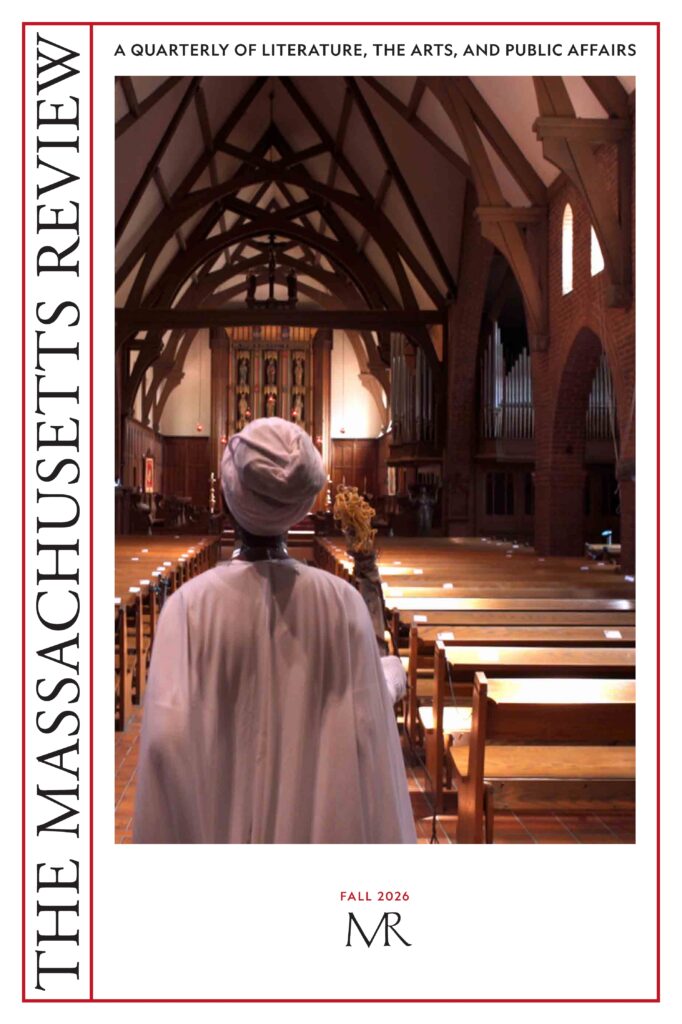

Interview with Jennifer Delgadillo

Tell us about your relationship to writing: How it began, and where it’s headed.
I’m going to be very literal about this because this is a big question. For me writing started in kindergarten. We had a great teacher—we called her “Lupita”—who taught us how to read and write with the poetry of Alfonso Reyes and movie clips from the Franco Zeffirelli Romeo and Juliet. It was a very positive experience and, for me, it was a big deal. Finally everything around me made sense. By the end of the school year, my feeling was that writing was the real way to participate in life. I was very grateful to Lupita and devastated to part ways with her.

After that, I wrote for pleasure. Journal entries, poems, jokes. I did all of this without ambition, and so when I moved to Indiana from Mexico at age seventeen, it was a big identity crisis. My English wasn’t great, my vocabulary was limited. Then, when I was in an English 101 class in college while studying painting, I had a teacher who had infinite patience and helped me write my very first essay in English: I wrote about moving to the US. I would show up to class with books in English I was reading (very slowly), like The Unbearable Lightness of Being, and stay after to ask a million questions. He could tell that beyond needing to get better at English, I was looking to find myself again.
After college, I had a little blog where I wrote about painting, and then I was invited to write for a local arts publication. Between my editor there and my husband (who pre-edited everything before I sent it to my editor), I was encouraged and learned so much about writing in English. I was writing all the time and seeing my byline every week, which was super cool.
I write every day. I hope to keep writing. It’s my right and I want to do it until I die.
What’s been inspiring you lately?
I’m inspired by normal, everyday people doing brave things, big and small, and how these experiences recalibrate how we see the world. Having a baby, for example, was a lot like learning how to read. Every place and space I know now has a new layer of meaning to be deciphered or even just a new way to navigate it. Yet it’s something so ordinary in the sense that it happens all day every day. People are having and making babies all the time everywhere. But before living it, I didn’t see it. Not like this, where I know what it’s like to live in this world with a busted body for weeks and what it’s like to be afraid to go out because social spaces don’t always make it easy for caretakers. And I now see this is a widely shared human experience and it’s kind of mind blowing that the world continues to be so cruel to women and children. All of us who are here on this planet arrived through a process of busting a person physically and emotionally, turns out. The lucky ones get to be loved by said busted person. In that vein, there are many other events and experiences that change the meaning of everything once you see them and I think that’s very inspiring.
Do you have any non-literary talents/hobbies?
Off and on through the years I’ve worked at my dad’s restaurant as a cook and dishwasher, or just taking orders. I loved being a brunch cook and I hope to someday be a brunch cook again. I also still make art once in a while. It’s hard to do any oil painting these days with the schedule and habits I have, but I do make a small watercolor here and there whenever I have time. If I don’t have time, I love looking at paintings and talking to painters. I have memberships for my local art museums and spend lots of time there.

Tell us about your writing process and your approach to craft, generally or for this piece. How do your pieces come to exist? Did you have an ideal audience for “The Interpreter”?
For this particular story, I was thinking about the act of observing and about painter Josef Albers. I was very interested in examining changes in perception, seeing the same situation or character surrounded with things that might be better or worse or just different, to see how our understanding of those same characters and situations is altered. I also wanted to put the human body through the wringer of the gaze, how it’s observed through medicine and art.
In general, my writing process skews towards intuitive and instinctual. I see my life and personal experiences as the moving pieces I can use to tell stories. The stories are fictions upon fictions, but for it to feel real, my characters have to feel like they are people I know. I think this helps me believe it when I’m writing it. All stories are possible outcomes or possible universes.
While working on this story, I was curating a series of literary readings at local bars, galleries and businesses, and so I would write thinking about how these stories would sound in those settings. But later, in the editing stages, I imagined the story could be interesting to immigrants navigating the assimilation process. While learning your new life, you find yourself comparing your circumstances to others because it is very hard. I remember suffering a great deal because I had no friends and making new friends was difficult—I could not communicate with others very well. In Mexico, I was always laughing with my friends; in the US people thought I was so serious, or even mean sometimes, because of my accent. But in the grand scheme of things, having to work two jobs while attending school, helping your parents financially, and not being able to joke around are very small hardships compared to the hardships of other people navigating immigration systems and experiences.
Who have been the most influential writers in your life? The most influential stories?
The really depressing Hans Christian Andersen stories, like The Little Mermaid, Little Match Girl, Ugly Duckling, that’s what we had in our home library growing up. I loved Mexican history and Greek myths. And, because I grew up in a Catholic country, I paid a lot of attention to Bible stories. The story of the crucifixion of Jesus was a big deal to me. I loved Tomie dePaola and The Little Prince by Antoine de Saint-Exupéry, too.
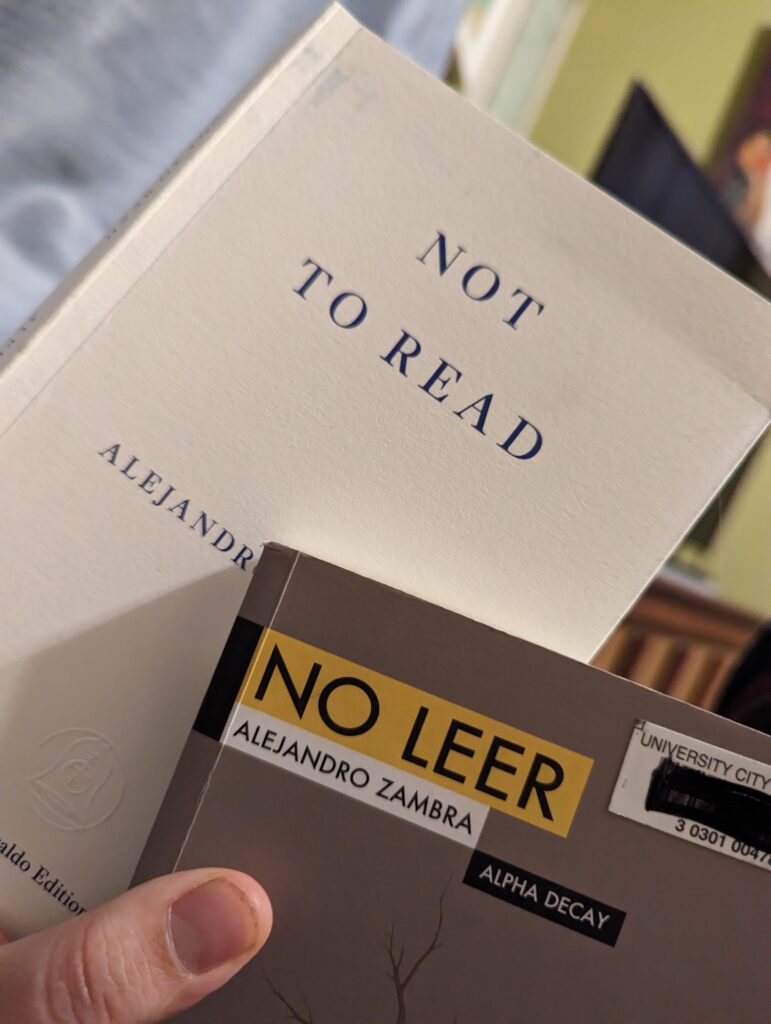
These days I love stories where big world things intersect with mundane small problems and humor. I’ll pick up anything by Alejandro Zambra, for example. I love Toni Morrison and Elena Ferrante. I’ve been reading Margarita Garcia Robayo in Spanish and I love her realism and wryness.
What are you writing right now?
I’m working on a novel. I published an excerpt but the novel is not done yet: I feel like I’m wearing a dress that has no back, but people can’t tell because I’m standing against a wall.
What’s your favorite part from “The Interpreter”?
I liked writing that Demetrio went full angry man when given a chuleta con huevo instead of a chorizo con huevo. This happened to a friend of mine in real life, but he didn’t get mad. It’s a very dumb thing to be mad about, but I can sympathize and I think it’s the kind of situation that would set someone like Demetrio off.

How did you decide on the interpersonal relationships in “The Interpreter”? I’m curious specifically about the role of Demetrio, both within the narrative and in Constanza’s life.
To tell a story where the nuances of immigrating and assimilating are central, I needed to address some cultural behaviors that are part of that package for many of us: codependence, sexism, the way the wellbeing of some family members is prioritized over others, the way we value some work over other types of work, and who gets to enjoy upward mobility. I think the relationship between Constanza and Demetrio explores this without having to get too deep into it. Also, I think having Demetrio in the periphery helps us see Constanza as not alone in the world without giving her a best friend or romantic relationship—that would have required me to develop her personality differently. Demetrio is not a great friend, he’s not perfect, but having family around is something. Many people are alone when they move to a new place. Constanza is fortunate in that way, she’s not alone.
JENNIFER DELGADILLO is a writer and artist from Mexico. She lives in Indianapolis where she is the arts & culture editor at local news non-profit Mirror Indy. She has an MFA in creative writing, fiction, from Butler University and a BFA in painting from Herron School of Art and Design. Her work has also been published in Narrative, Booth, Indiana Review, and elsewhere.