
Interview + Reading with Kevin D. Jordan (text + audio)
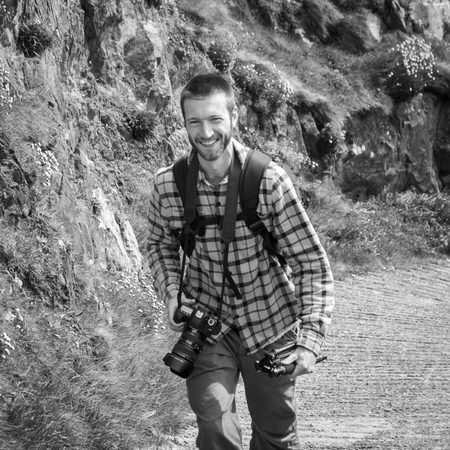
Editor’s Note: The following is an edited transcription of a larger Zoom interview, available in-full below. Kevin D. Jordan reads from his story, “The Forest as Witness” (Volume 67, issue 3), from 9:08–12:00.
Tell us about yourself and your relationship to writing.
It’s been a long and gradual road for me. In high school, I was very much a math and science brain: I liked numbers, I liked simple answers, and straying away from that didn’t interest me.
I went to Suffolk University in Boston to study environmental science and, for whatever reason, I was invited to take an accelerated English course. I wasn’t going to, but my sister and my mother convinced me that it was a good idea. The class was really engaging; it opened my eyes to the idea of, “Oh, I could be decent at writing; I can do this for fun, and find my voice.” …It took a long time for my voice to develop.
I had a breakup when I was in my mid-twenties and did some freeform writing after that. I sent it to a friend who said, “There’s some good stuff here, but I think it would benefit a lot if you tone down the snarkiness by like 80%.” I think that was a turning point for me; it gave me permission to open up and be sincere about a lot of things.
This story in particular is my first attempt at fiction in my adult life, and there’s no humor in there. Earlier attempts at this topic veered in and out of humor, and it just didn’t feel right. I could have made it work if I really worked at it, but in my gut it didn’t feel like the right way to tell the story.
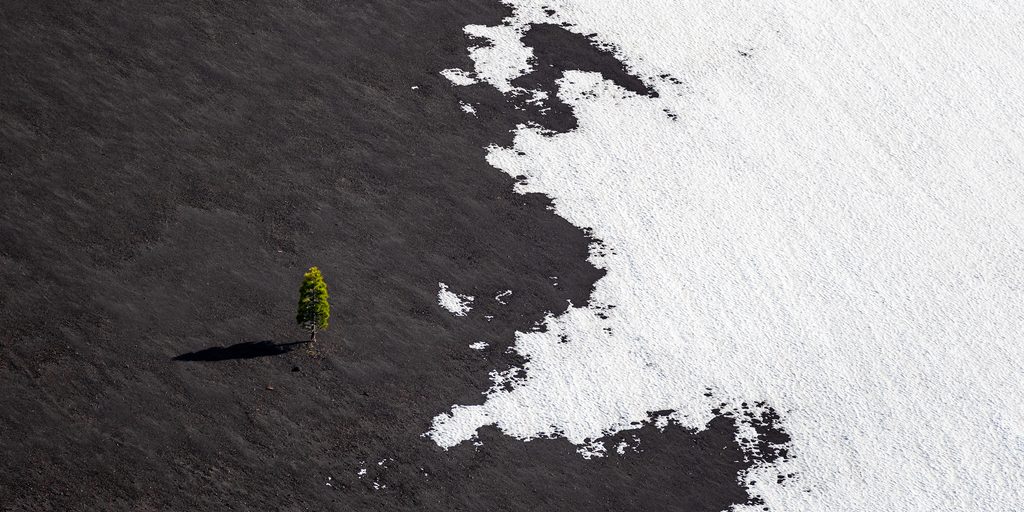
“Resilience.” Lassen Volcanic, CA. By Kevin D. Jordan.
I’m reading your story as a grief piece, a climate piece, almost a sci-fi piece… What do you mean specifically when you say “this topic”?
I grew up living either with or next door to my grandfather from the age of three until about 14 or so when he died. The last five or so years of his life, he had Parkinson’s and Alzheimer’s disease: I watched that slow decline that he went through and it was really impactful for me. You know, even twenty plus years later, it’s still a very important part of my life—both him and the event of seeing that. I had always wanted to write about it in some way, but I had just never been able to. I would attempt every once in a while, put it away for a few years, attempt again.
During the pandemic, I had plenty of time to think. I thought to myself, Is there a way I could do this in more of a metaphorical or fictional sense?
The leading theory in terms of how Alzheimer’s affects the patient is there are these buildups of protein plaques and tangles in the brain which disrupt neuropathways. Coming from an environmental science background, it felt natural to explore this in sort of an invasive species sense.
Will you talk more about the tangles themselves? I couldn’t tell how un/intentionally violent, or sentient, they were throughout. Were you purposely leaving this concept vague?
It’s funny you mentioned the sentience because I’ve never viewed it that way. I’ve always viewed them as being very evolutionarily, like their purpose is to survive.
So they’re opportunistic, they’re indiscriminate, which I think makes it even more brutal. But you’re also not the only one who has questioned the sentience, either. I showed this to a few friends early on in the process, and that was one of the comments I received a couple of times: “I wasn’t sure what direction this was going to go,” “I thought this might veer into them being sentient/being a central character to the story.” And I still think they’re a central character, just not in that way.
While writing, I tried to be as vague as I could be while still saying what I wanted to. I didn’t want to create an entire world, or an entire technological system: I mean, I already created an entire species… I wanted the speculative aspect to be a vehicle for the story, but not be what mattered about the story.
What stories stuck with you from that first English class? What are you reading now?
I think the one that stuck with me from the English class was “The Ones Who Walk Away From Omelas,” Ursula K. Le Guin. It’s funny: I reread it within the past year or so, and I’m not sure that it would be one that I’d gravitate to now. I still think it’s great! But it just happened to be, I think, one that I read during a very formative time.
More recently, I’ve been reading more short story collections, leaning into science fiction/speculative fiction. Ted Chiang’s Exhalation: that broke my brain in the best way; Ken Liu’s The Paper Menagerie. Earlier this year: Recursion by Blake Crouch, who’s better known for Dark Matter, but Recursion goes more into consciousness. I had to stop at times and wrap my head around what was happening. By the end it absolutely kicked me in the face.
How does your photography inform your writing, or vice versa? How does your actual job, which is much more technical in nature, interact with these more artistic endeavors?
They’re all parts of me. I mean, certainly, I feel bad for anyone who has to read a technical report that I write, because they’re not exactly page turners. But also, I do enjoy the work that I do; it definitely exercises that that science part of my brain that is still a big part of me. The landscape photography and the writing are the lenses through which I’m able to see the world.
The photography in particular is something that has spurred me to go explore. There are plenty of situations that I find myself in—alone in the desert at three in the morning, or on a mountain ridge, under the night sky alone—I wouldn’t do those things if I wasn’t trying to get a photo.
Photography and writing have always been a little bit intertwined for me. Photographs can certainly tell a story, but I’ve always enjoyed attaching stories to them about the place, or the experience of taking the photo; that ables me to deepen my connection with them, and potentially allows someone else to deepen their connection as well.
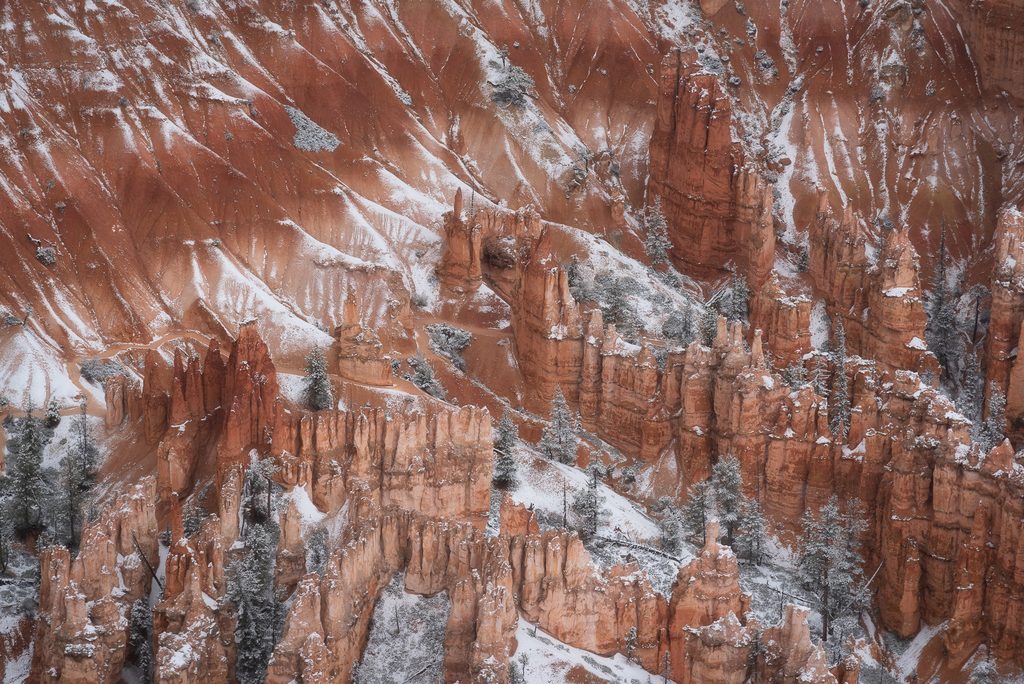
Bryce Canyon, UT. By Kevin D. Jordan.
What are you writing right now?
I have another story that I’m working on. It’s in that stage right now where I’ve put it away for a little bit, and I need to go back to it. The bones are there, but it needs more (and I’ve needed some time to figure out what the more is that it needs). If it follows the same timeline as this story, we’ll see it in like five years or so.
KEVIN D. JORDAN is a landscape photographer and environmental consultant based in southern New Hampshire. He uses photography and writing to explore the natural world and the connections that tie us to place and to each other. “The Forest as Witness” is his first published story. More of his work can be found at www.kevindjordan.com and on Instagram @KevinDJordanPhoto.