
Dolores Huerta Left Us Homework
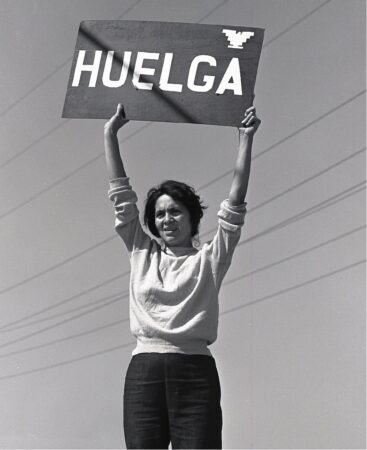
Dolores Huerta, September 24, 1965, holding a Huelga (strike) sign
Credit: El Malcriado, Wikimedia Commons
https://libraries.ucsd.edu/farmworkermovement/archives/#malcriado
Millions are grieving Dolores Huerta and uplifting her legacy of leading many movements—labor, migrant, feminist, anti-racist, and queer. She is a driving force, a light for justice and a beloved elder who fought endlessly to reclaim the dignity and humanity of the most forgotten.
In the twilight of her life on the material plane, moments before turning 96 and months before her transition on October 28, 2026, Dolores Huerta declared “my silence ends here.” Dolores asserted that she was a survivor “of violence, of sexual abuse, of domineering men who saw me, and other women, as property, or things to control.” She shared her stories of surviving sexual harm and rape from a man who would be hailed no more as benevolent leader of a movement and a people: Cesar Chavez.
Dolores Huerta founded the organization that would become the United Farm Workers in 1965 alongside Chavez. With Larry Itliong, she spearheaded successful movement strategies including the famous grape boycotts of the 1960s that won pivotal union contracts for better wages and better working conditions for farmworkers. Yet, while the brilliant Dolores Huerta was organizing laborers across the fields of California, and leading marches to Sacramento, she was also enduring sexual harm within the struggle. The colonial racial subordination of agricultural workers that the movement fought against was turned inward to unleash brutal violence on women and girls in the movement.
Both in real time, and in historical retelling, Dolores’ leadership was continually marginalized. The range of disrespect for women and girls, said Dolores in her interview with María Hinojosa, makes rape “so prevalent. Men get away with this all the time, and we know it’s something that really needs to be addressed.”
Dolores’ statement references the spectrum of aggression she and other women endured from the plural “men.” Heteropatriarchal dominance generates the possibility of rape and confers impunity upon rapists. The only way to end rape is to end the politics and practices of dominance structured into the colonial social fabric.
Dolores’ truthtelling also exposed the continuing backlash towards survivors. Women of color, especially, are doubly silenced by the sexual politics of victim-blaming and the racist criminalization of their communities. Even Dolores Huerta, breaking silence after 60 years, faced doubt, questioning of her motives, and community shunning.
Still, Dolores spoke, and her speaking moved mountains. She opened a window for numerous survivors to share in her courage and reclaim their voices by telling their stories. Chicanx organizations reinvigorated their efforts to address sexual harm. Historians challenged the blinkered historiography that dangerously centers charismatic male leaders as the drivers of social change, denying agency and power to women activists and the grassroots masses.
Dolores always challenged our community to be better. She pushed us to envision the world we want and to bring it into being.
Dolores left us homework—let’s get it done. In her own words, “Organize! Organize! Organize!” Her voice and legacy challenge us to do better—to deepen our resolve to both end sexual violence in our Chicanx communities and beyond, and to support, center, and BELIEVE survivors.
Our movements and communities are stronger when we flip the colonial script and disarm heteropatriarchy everywhere. Do not surrender our strength and movement capacity to the racial divide of sexual violence. Let us each take accountability for how we maintain heteropatriarchal social organization.
Together we can stop the rape of women and children in our families, communities, and movements.
Sí se Puede!
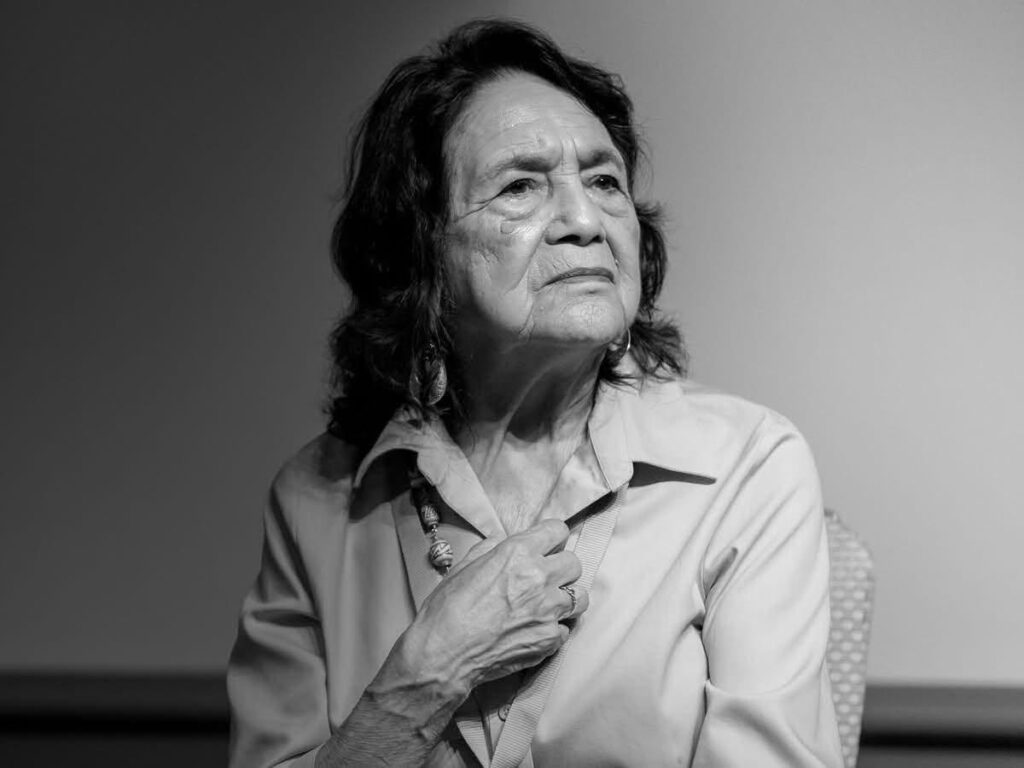
Photo: Rafael Shimunov
Note from Rafael Shimunov: In the Fall of 2017 I got to chat with Dolores Huerta in Atlanta, Georgia at Netroots. We spoke about our families, the future of young people in this nation and the world. I praised her lifetime of work and struggle. Of course I didn’t know then about the secret she was forced to keep. I asked to take her portrait and she said “A lot of people are talking about my past. Take the portrait like I’m looking to the future.”
¡Sí se puede, reina!
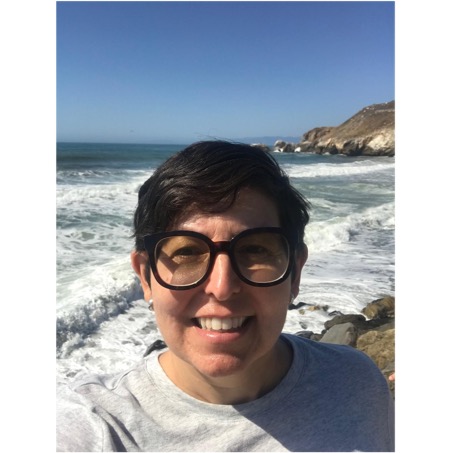
ANA CLARISSA ROJAS DURAZO is faculty in Chicanx Studies at UC Davis. She has matrilineal roots in the Sonoran Desert. A warrior poet movement mama, Rojas has authored and edited path-breaking feminist essays and collections including Color of Violence: the INCITE! Anthology and Ending Heteropatriarchal Violence in Chicano Studies. Her recent work traces the transformation of violence as invigorated by Queer Chicanx art, literature, and performance.
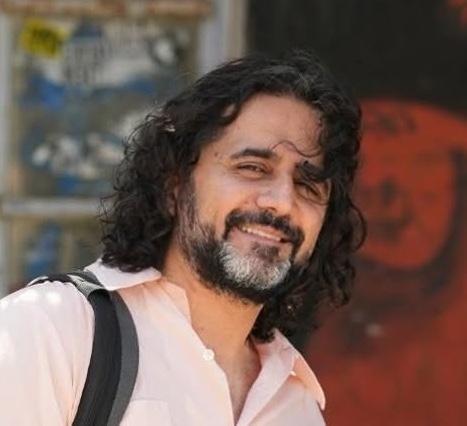
RAFAEL SHIMUNOV is an artist, organizer and commentator from Queens, New York City. Shimunov is the co-host of Beyond The Pale: Radio’s Home for the Jewish Left on NY’s WBAI 99.5FM. His works are featured in the books Be A Revolution, Risk Work: Making Art and Guerilla Tactics in Punitive America and Génération Ocasio-Cortez: Les Nouveaux Activistes Américains. Find Rafael on Substack here.