
Interview with Shelby Handler

What was the first thing you wrote that you were proud of?
The first time I felt a poem inside me: I was standing under a snow-heavy lilac tree in my backyard. Beneath its low branches, my small body fit snug as a winter fruit inside a glittering husk. I was new to language. New to color, light, temperature, mittens, memory, mothers. I was too young to write the feeling down, but the urge persisted until I learned the alphabet. It persisted (perhaps tenfold) once I learned to write. It persisted, magnified by the grief of losing that particular snow, that tree, that yard, that home. It persists now, carved deeper and larger by losing the possibility of snow altogether, by losing my parents, by losing that first sense of home and childhood. I will always be trying to carry memory out from under the lilac without disturbing the snow on the branches. I will always be failing. I am proud of that.
What’s been inspiring you lately?
My poems are consistently nourished by three main sources: plants & seasons; other poets & poems; and tenacious & brilliant grassroots organizing. Right now, I’m particularly moved by the Providence for Palestine Coalition who are on the precipice of making Providence the first city in the U.S. where voters choose to divest their tax dollars from Israel. Organizers spent months collecting over 10,000 signatures to get divestment on the ballot. If they win, 2.5 million dollars will be divested from Israel and other countries complicit in genocide. Just imagine the thousands of door-knocking conversations and countless hours of fastidious data entry that it took to build this campaign—it makes me want to write (and organize)! I want to make poems that fuel us to build a world where genocide is unimaginable and where everyone has what they need.
Do you have any non-literary talents/hobbies?
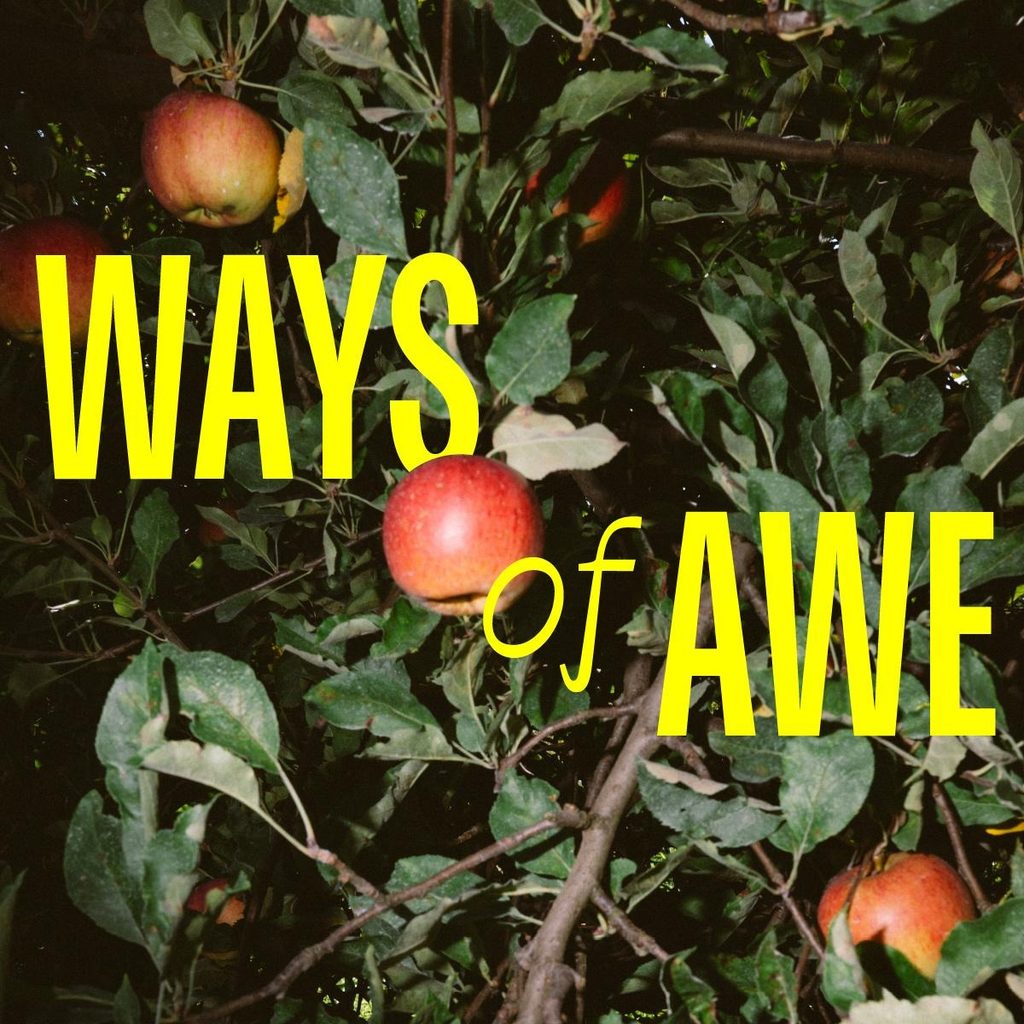
I am elated to say that I recently released the first season of a podcast project! My longtime collaborator Maia Brown and I created Ways of Awe. Weaving together interpretative translations, research, interviews, and sounds, Ways of Awe is a queer anti-Zionist audio companion for the Jewish High Holidays. It features Talmud scholars, rabbis, and artists as they unearth the meanings, grammar, and ancient gossip inside the holiest prayers of the Jewish year. After years of translating, researching, scripting, interviewing, and editing, we’ve been elated to have thousands of listeners join us in our obsession with the liturgy of the Days of Awe. It’s so fascinating to work directly with sound, rather than just words on the page. Take a listen if you’re curious—we’re hoping to stir up a Season Two soon!
What are you reading right now?
I’m usually reading different things across genres, so I’ll give you a slice of all my different piles (not a metaphor, we’ve run out of bookshelf space). In the non-fiction section: I just finished Spirits of Our Whaling Ancestors: Revitalizing Makah and Nuu-chah-nulth Traditions by Nuu-chah-nulth scholar Charlotte Coté. It completely changed the way I understand the histories and present of the coastal waters that I live nearby. On the fiction pile, I just started Avalon, Rise, the newest novel by Madeline ffitch. Her last novel is probably one of my all time favorites, Stay and Fight. If you haven’t read it, find it immediately! Last but not least—the poetry pile just got an exciting new arrival from a brilliant local poet, Serena Chopra’s A Catalog of Future Mercies.
Tell us about your relationship to Mónica Gomery. How is this piece inspired by her?
Mónica is a brilliant poet and rabbi. I’m grateful to count her as a dear friend. Fun fact: she married my partner and me two months ago! Mó has been both a mentor and a comrade in studying talmud and writing poems. We connect over many shared obsessions: liberation, ritual, text, ancestors, diaspora, g-d, queerness. I like to tell her that our poems are cousins (which is perfect, since her most recent book Might Kindred orbits the idea of “cousins” in many gorgeous ways). “Because It’s Elul” is after a poem of Mónica’s with the same title. This poem and many of Mó’s poems have a way of re-embodying Jewish theology and ritual with everyday aliveness and immediacy. Elul is the final month of the Jewish year, leading up the Jewish High Holidays of Rosh Hashanah and Yom Kippur. It’s a time for doing cheshbon hanefesh (accounting of the soul) through prayer and reflection. Mó’s poem lets us into a moment of that soul accounting and the yearning for wholeness it evokes. Final fun fact: Mó and I started joking (or dreaming?) about curating an anthology of Elul poems—so let us know if you’ve got one cooking.
I’m curious about the difference in imagery and dramatic weight between the original version we received and the final version we ended up publishing, which was cut down by quite a few lines. Talk about your decision making process for these changes. Do you miss any of the original lines?
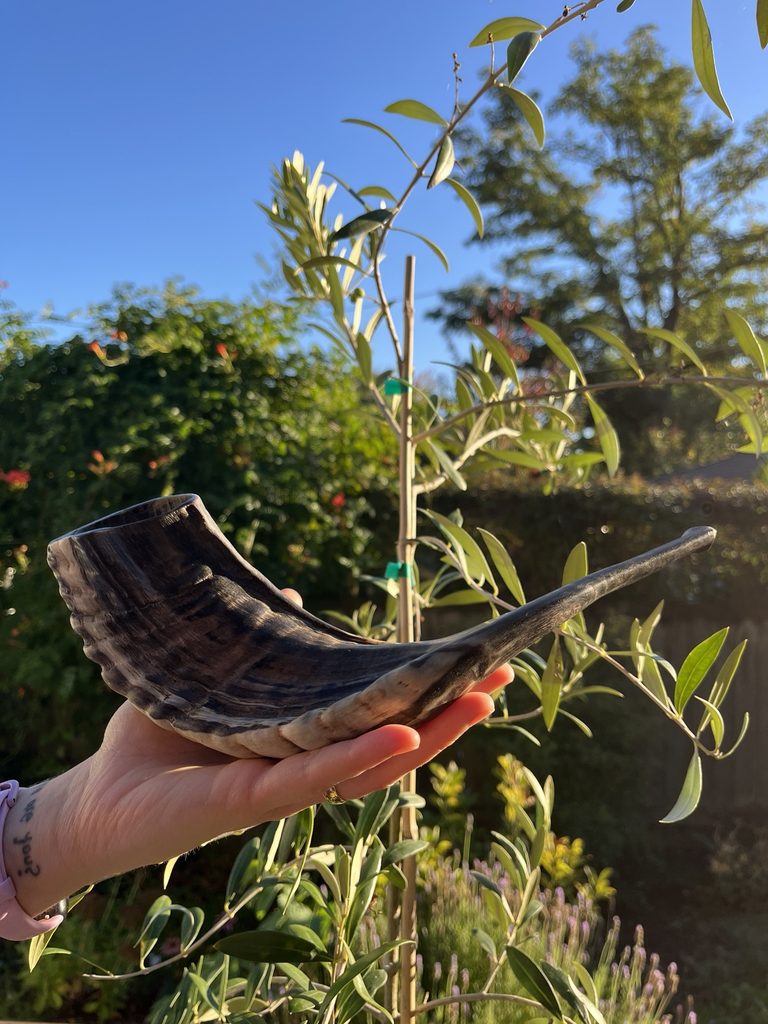
This poem has gone through so many transformations! To find the very first draft, I just searched in my sent mail to find where I sent it to Mó after freewriting (importantly, the subject line was “…did I just write an ‘after Mónica Gomery’ poem?”). That first draft had some wild lines that I loved re-reading, like “the exchange carved/an auditory glory hole into the air above us” and “our ancestral antlers wailing back and forth.” While it was extremely difficult to remove the glory hole and the antlers, it ultimately served the poem to go through many cuts. Another poet friend, Gabrielle Bates (if you haven’t already, read her brilliant debut Judas Goat) helped me realize this, after she suggested cutting some lines that I’d been holding onto. Having a trusted friend see what can be cut always helps me let go (“killing your darlings”). The poem sings more after being pared down. That singularity and emotional density is akin to the sound of the shofar itself.
What’s your favorite line/image/part from “Because It Is Elul”?
The ending of this poem has not changed since the first draft. Even as so much was thinned and changed, the poem always knew it was careening towards an ending of pure refusal. It was both satisfying and challenging to feel the poem’s early clarity about its arrival. Early on in drafting, it can be hard to tell what is trustworthy clarity versus a dopamine-induced “afterglow” that will fade. I prodded and prodded the ending, worried that the volta would be confusing or didactic. Through it all, this poem held onto its clear-eyed resistance. Its closing directive is “No. That gash is not shaped like any state./Do not shove a nation inside it/and expect it to still sing.” I hold this ending with me when I need to invoke the spiritual dimensions of rejecting Zionism’s depraved theft of Judaism and continuing to fight for Palestinian and collective liberation.
SHELBY HANDLER is a writer and organizer with Jewish Voice for Peace. Recent work has appeared in and or is forthcoming in Prairie Schooner, POETRY, The Iowa Review, Beloit Poetry Journal, Redivider, Poetry Northwest, Southern Indiana Review, among others. Shelby received their MFA in poetry at the University of Washington-Seattle and has been nominated for a Pushcart Prize, Best New Poets, and Best of the Net.