
10 Questions for Elizabeth Bradfield
I have touched those cold seeds
waiting to sprout, to reach toward what
is sun. North & South did taste
different. But I don’t trust my memory.
—from Elizabeth Bradfield’s “#73” (Volume 66 Issue 3)
What writer(s) or works have influenced the way you write now?
Everything I read influences me, but some of my deep, early, persistent influences are Mary Oliver (her understated craft and the direct whomp of her poems!), Carl Phillips (imagistic, erotic, emotive drifter extraordinaire), Alan Dugan (cranky, self-protective marshmallow), Pattiann Rogers (for the love of science!), Anne Carson (smarty-pants and not afraid to show it), Sharon Olds (baring the body and the desiring, querying self, always), Linda Bierds (for the ways history shows us our inner landscape), Adrienne Rich (seeking connection across selves, through the politics we swim in), Lucille Clifton (for generous, kind searching).
What other professions have you worked in?
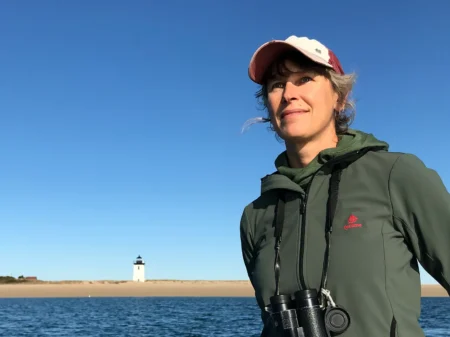
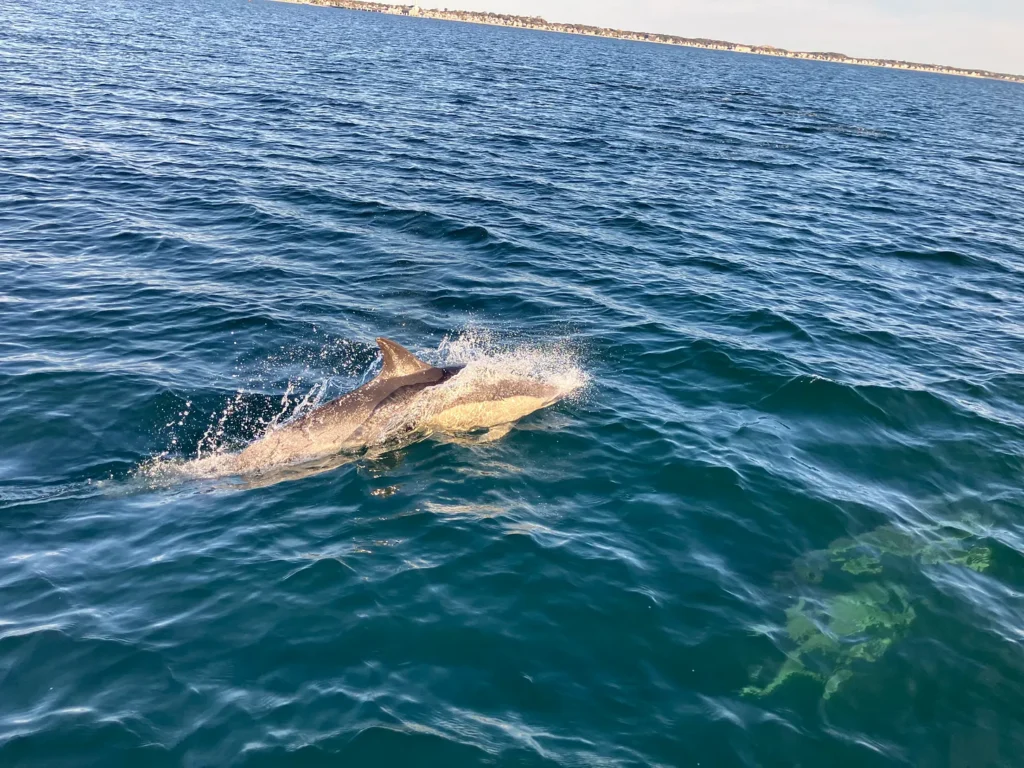
Like a lot of writers, I’ve had lots of kinds of jobs (house painting, catering, restaurants) but the work that has felt like a deeper commitment to the culture of its practice includes my years working for a dot-com startup as an editor, which evolved into many years doing web design. Most significantly, I have worked for decades and still work on boats—as a mariner and as a naturalist, which has also led me to helping biologists with field work, mainly with whales and seals. This is a vocation for me as much as writing.
What did you want to be when you were young?
An undersea explorer, an architect, or a detective. For a brief time, a psychologist. I think that, as a poet, I get to be all those things, metaphorically.
What inspired you to write this piece?
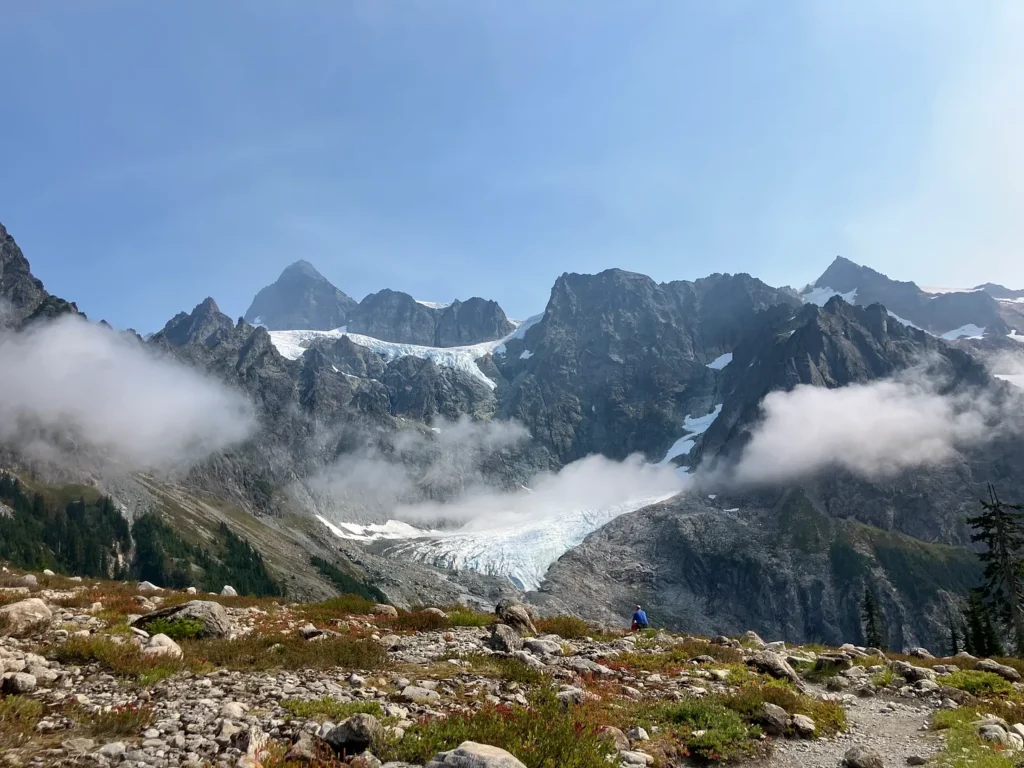
I was thinking about the Arctic and Antarctic as a source of glaciers, menopause, and how both (glaciers, hormones) can change the landscapes they bathe or cover.
Do you have any rituals or traditions that you do in order to write?
I have a particular kind of notebook I love to write in, and I’ve used them since I was in my twenties. I have a stack of blank ones because I am afraid one day they will stop making them… and then what will I do? I also love having a “comfy reading chair” where there’s a stack of books, a place to set a cup of coffee, a drawer for a good pen that no one else is allowed to use, and a window to stare out of. I can write without that, but it sure is nice to have a creative nest of sorts.
Is there a city or place, real or imagined, that influences your writing?
The sea, shore, ocean, wave, horizon. The arctic—tundra, glaciers, cultures, musk ox, narwhales, ivory gulls, sea ice, saxifrage, moss, kittiwakes, bearded seals, horizon, horizon, horizon.
Who typically gets the first read of your work?
My inner editor. I’m being cheeky—I have a creative partner who I work with, the sculptor Janice Redman who is also my neighbor. We have “parallel play” sessions in her studio, and if I finish a draft when I’m there with her, I always ask her if I can read it aloud. She is such a wonderful listener! She stops what she is working on, settles in, and just quietly listens. It’s such a beautifully supportive experience. Sometimes, if it’s something I think she will like or if I think she might have an interesting take on it because it’s tied to her work as a biologist or an experience she and I have shared, I read to my partner. Otherwise, I don’t share much of my work in process. When I’m finishing a manuscript, I have a few trusted writer-friends I ask to read it—Christine Byl, Alexandra Teague, and Sean Hill have been my most trusted readers for that stage of my work.
If you could work in another art form what would it be?
Boatbuilding.
What are you working on currently?
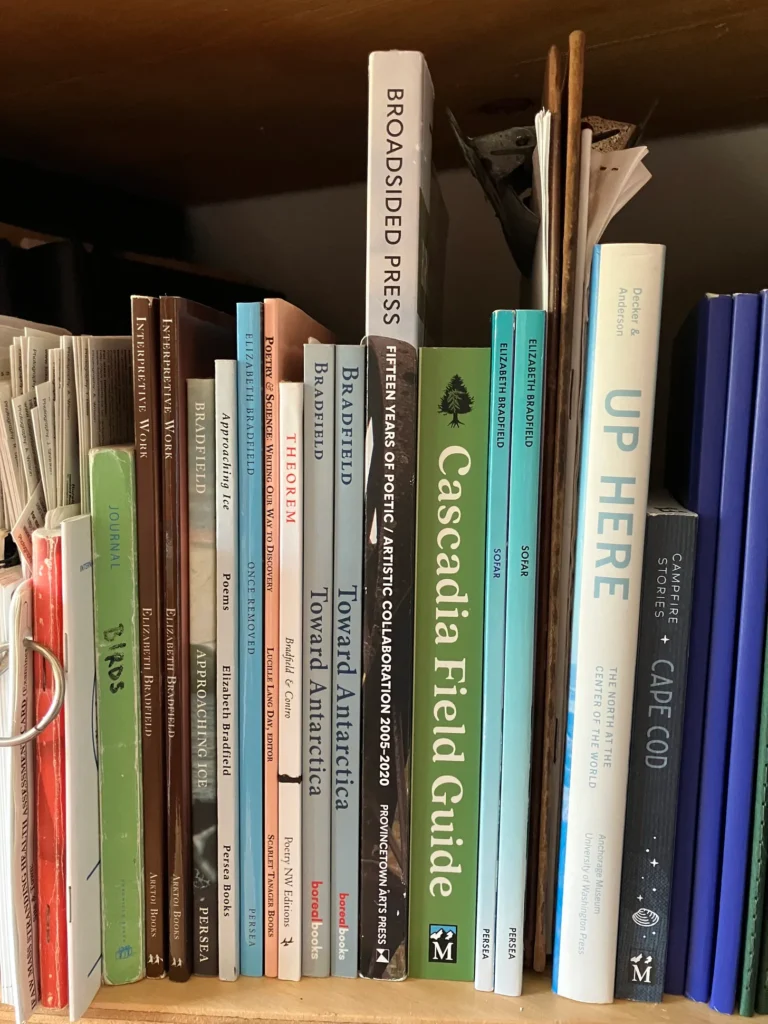
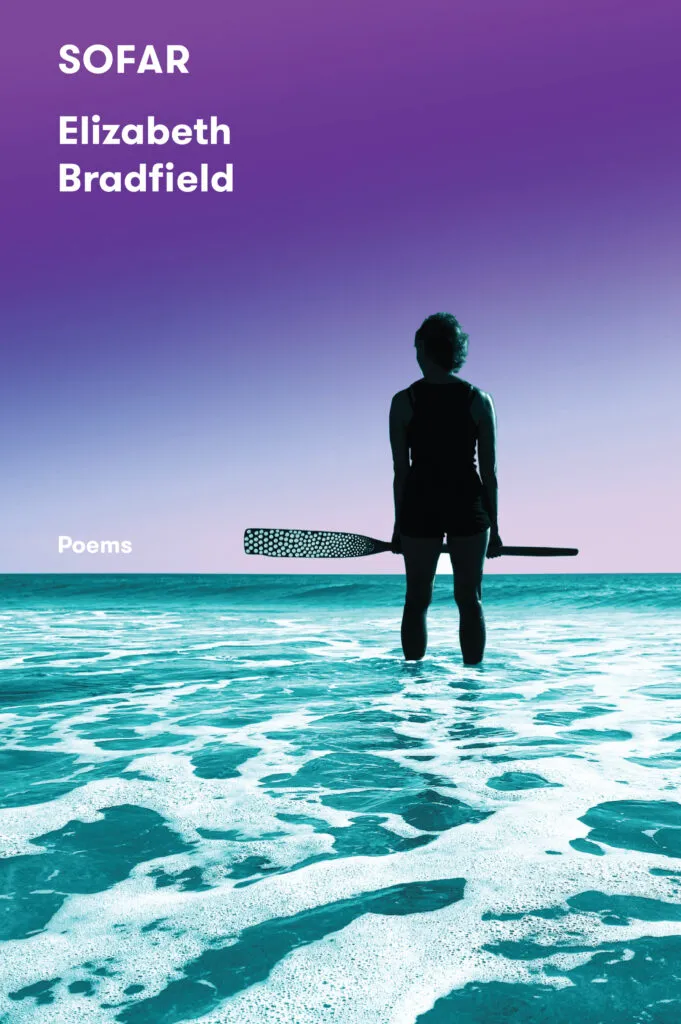
I’ve just turned in a collaborative manuscript to a publisher, and I’m putting a lot of energy into teaching and getting my new book, SOFAR: Poems, into the world. In the deep background of my mind, I’m gearing up to dive into a nonfiction project that has been percolating for several years. I’m hoping and trusting that, as I turn toward that prose, poems will sneak in. They are always invited.
What are you reading right now?
The Memoirs of Miss Chief Eagle Testickle: A True and Exact Accounting of the History of Turtle Island, by by Kent Monkman and Gisele Gordon. I’m also re-reading Companion Grasses by Brian Teare, and I’m eagerly awaiting the arrival of Public Figures by Jena Osman—I’m very interested in all the wonderful image + poem hybrid work that is coming into the world.
Writer/naturalist ELIZABETH BRADFIELD’S most recent books are Toward Antarctica, Theorem, and Cascadia Field Guide: Art, Ecology, Poetry. Her poems have appeared in The New Yorker, Atlantic Monthly, Poetry, The Sun, and her honors include the Audre Lorde Prize in Lesbian Poetry, a Massachusetts Cultural Council grant, and a Stegner Fellowship. For the past twenty-some years, Liz has worked as a naturalist and field assistant at home on Cape Cod as well as on small ships around the globe. She teaches creative writing at Brandeis University and is editor-in-chief of Broadsided.