
Lessons from Honduras: Storytelling the Truths We Cannot Name
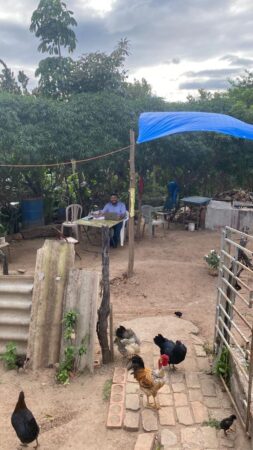
Dany Díaz Mejía writing in his village, Nueva Esperanza, Honduras
Two weeks before the November 30, 2025 elections took place in Honduras, I traveled to Washington, DC for the largest Catholic social justice gathering in the U.S. I had been invited by the Ignatian Solidarity Network to give a talk about how Central American artists like myself had devised creative ways to tell our truth under increasingly authoritarian regimes.
I was excited to be back in the U.S. I first arrived in 2007 with a scholarship to study at John Carroll University, then stayed for a master’s at Carnegie Mellon and a three-year stint at a nonprofit in Pittsburgh. As a student, clearing immigration had always been relatively uneventful. My last year of college I had to make an emergency trip to Honduras for my father’s funeral, and when I came back to the U.S., the immigration officer was very kind and offered me his condolences.
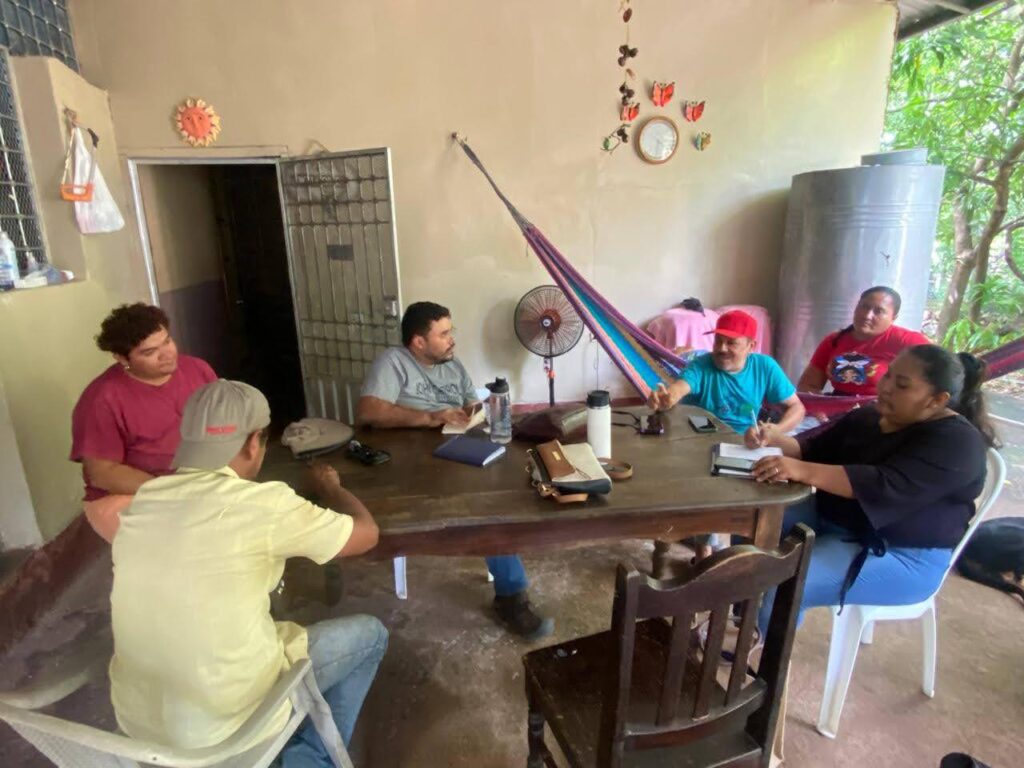
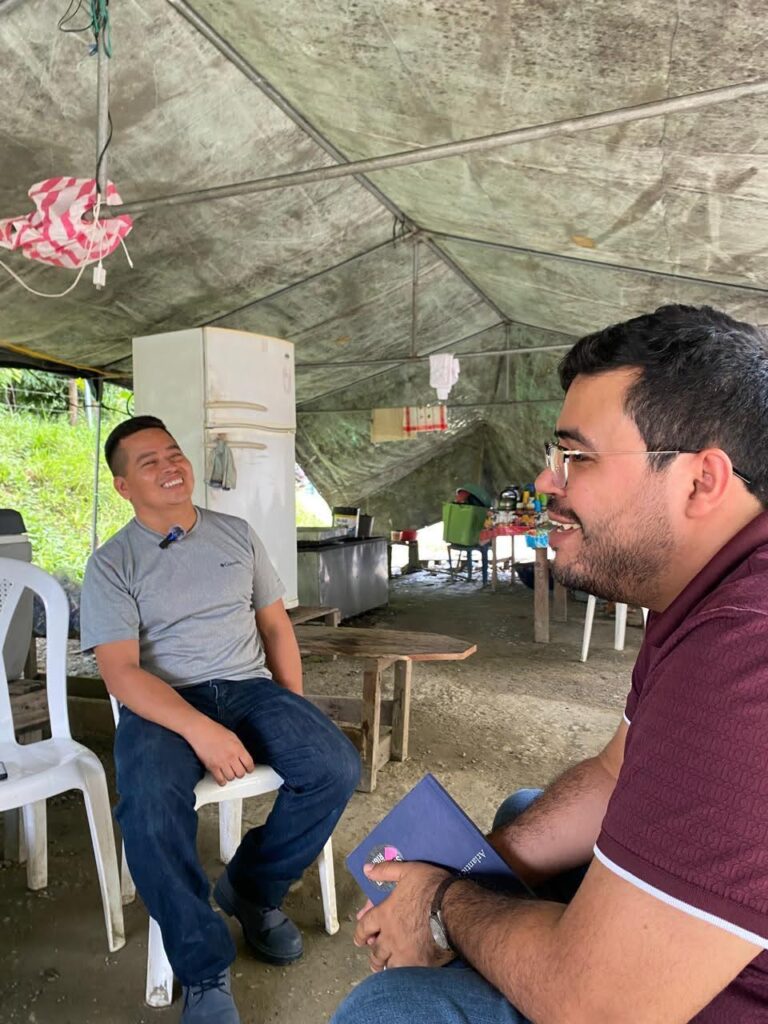
Reporting trip to interview community leaders in Zacate Grande, Honduras
Now, things were different. Until April 2025, I had been the most recent Honduras representative of the United States Institute of Peace, or USIP, before Elon Musk’s Department of Government Efficiency shut it down. I feared getting stopped at the border for a long interrogation, or worse, being denied entry altogether, on the basis of Musk’s unfounded claims that the USIP had financed terrorist organizations.
At the border, the immigration officer asked for my address. I offered a printed letter, but they asked for my phone instead, and I got nervous. I was afraid they would go over my LinkedIn and see I had worked for USIP, even though they probably already knew it. They scrolled through a lengthy tomato-soup exchange with my friend on WhatsApp until they saw her address, and told me I took too long to hand over my phone and accused me of being uncooperative. So I smiled, and they let me go. As I walked away, I felt like I was in trouble without knowing why.
*
Coming from Central America, though, the exchange felt eerily familiar. I have seen first-hand how authoritarians take advantage of people’s fears to concentrate power, roll back our rights and silence us. Last year, in El Salvador, President Bukele used the immense popularity he gained by cracking down on gangs to restrict funding to organizations that have been critical of the government. A close friend of mine, who is also a journalist, left the country out of fear they would be arrested for reporting on government corruption. In 2025 alone, forty-three more journalists were forced into exile.
Meanwhile, in Honduras, the last government gave the army its own newspaper; supposedly to inform the public on military matters. But only five months away from the elections the army used it to accuse three Honduran journalists of being sicarios de la verdad (“truth-killers for hire”) and enemies of the state, after one of them criticized the increasingly political role of the military in public life. In Honduras, defamation and slander are considered criminal offenses that could land a journalist in prison for six years, or cause them to be persecuted by criminal groups and become one of the one hundred and one journalists killed between 2001 and 2025. The challenge, then, is to be truthful even when you can’t say the whole truth. That’s how I started writing fiction.
*
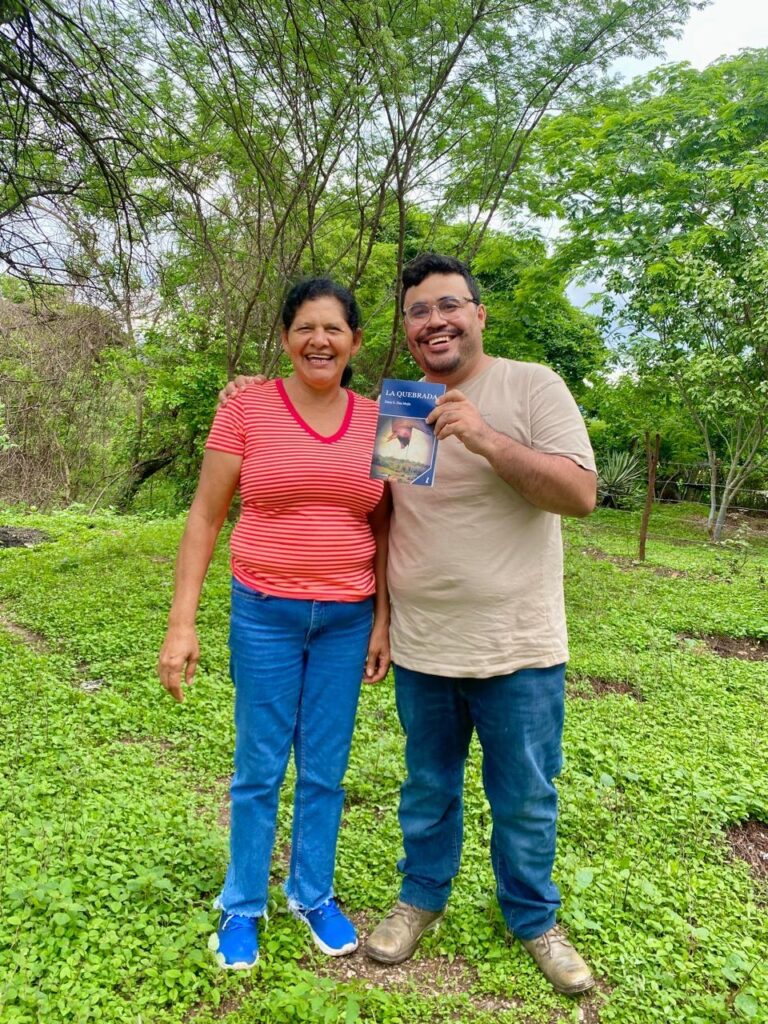
In 2017, Juana, one of my family’s closest friends, lost her twenty-six-year-old son. He was brutally killed in my village, most likely by a gang. He’d been missing for three days. When a neighbor found his body, the police took him to a medical examiner in the city. That night, Juana asked her daughter and me to bring back the body for a proper burial. The final rites—which include putting a glass of water on top of a loved one’s grave, in case they were thirsty when they died—would ensure her son could rest in peace.
We spent hours convincing the morgue attendant to give us the body. He asked for an affidavit, two copies of our IDs, and a special casket. Once we managed to retrieve it, we took the body of Juana’s son back to the village with us, in the back of a pickup truck. After the funeral, I asked Juana if she wanted me to help her file a police report. She refused, afraid the gang might come after her other children. A traditional funeral seemed like not enough justice. Since we couldn’t talk openly about what happened, I wrote a fictional account in a short story. For two years, I kept writing, until I finished my first short story collection, La Quebrada, which explores how communities resist state and gang violence in rural Honduras.
When I can’t name the truth directly, there are three main strategies I use. First, I set my stories in made-up towns that reflect the power dynamics and emotional realities of actual places, like Luisa Valenzuela did in her 1983 short story “Censors,” which uses humor to expose the absurdity of Argentina’s dictatorship, without ever naming the country. Second, in my journalistic pieces, I shift the attention away from the powerful and center stories of resistance instead. And third, I choose to write stories that are personal, but always speak to larger political affairs.
*
After my trip to the U.S., Washington seemed to follow me home. Two days before the elections, President Trump threw his weight behind conservative candidate Nasry Asfura, threatening to cut off aid to Honduras if he lost. After a questionable re-counting process of disputed ballots that took thirty days, Trump’s preferred candidate was declared the winner, even as the difference between the two candidates was less than 1%. Like many other Hondurans, the elections left me with a deep sense of disappointment and frustration.
From Venezuela to Cuba, it’s hard not to worry about Trump’s increasingly bullyish approach to Latin America, even though the history of U.S. interventions in the region is long and well-known. I’m afraid he might demand a pound of flesh from Honduras too, as payment for his “support.” Throughout the rest of my U.S. trip, I spoke with activists and thinkers whose insistence on the inherent worth of every human being, whether they have a criminal record or not, stands in stark contrast to the brutal immigration raids in Minneapolis. Watching students march on the Capitol to demand humane treatment for Latin American and other immigrant communities moved me.
In this moment of growing global authoritarianism, building international networks of solidarity is key. I don’t know what new restrictions might come to freedom of expression, or how the current ones might be used. But I have a profound need to feel free in my mind, to know in my heart that, no matter what comes, no one can control my imagination. I know that I need to keep listening and telling stories. I need to keep doing it in community, in Honduras and abroad.
It’s the only way I know for us to make it to the other side of pain.
Dany Díaz Mejía is a Honduran writer and policy analyst. His work has appeared in Granta en Español, America Magazine, Contracorriente, and GatoEncerrado. He’s the author of the short story collection La Quebrada (2019), adapted to Braille by the Argentinean Library for the Blind in 2026, and Chronicles of what we leave on the shore (2024), a collection of personal essays. He’s also an Atlantic Fellow at the International Inequalities Institute of the London School of Economics. You can find more of his work here.