
Conversation between Kelsi Vanada and Emilio Jurado Naón
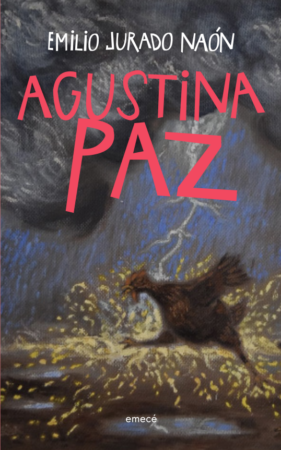
This is an edited transcription of a larger recorded conversation between Kelsi Vanada and Emilio Jurado Naón, available in full below. Vanada is the translator, and Naón the author, of the novel Agustina Paz, an excerpt of which is featured in our Summer 2026 issue.
Readings from the novel excerpt happen in Spanish from 5:55–7:46 and 17:24–19:21; the translated English readings happen from 7:47–9:54 and 19:22–21:27.
[Emilio Jurado Naón, author]:
Your translation sounds beautiful, so thank you. I was intrigued about how it would be to [hear] my own writing in English; this is the first time I’ve been translated into English. I had the opportunity to be translated into Hungarian, but I can’t read that… This is the first time I can give testimony about a translation, to have an opinion about the work of another.
I was wondering how you began to translate from Spanish and from Swedish. What Spanish poetry first engaged you? How would you say your work as a literary translator influences your poetry writing and vice versa?
[Kelsi Vanada, translator]:
Spanish is the language that I learned in school, and it ended up being my second major in my bachelor’s degree, along with English. Swedish came a little later. My ancestors came from Denmark, so when I was in college I studied abroad in Copenhagen and learned some Danish. I met Mari Sidgaberg, who came to Iowa City where I was in graduate school, and we were paired together to translate some of her work into English.
As a pretty young person, I was reading (at least excerpts of) Octavio Paz and Neruda and García Márquez; Laura Esquivel and Gabriela Mistral were some early ones for me. While taking a class with Spanish MFA students at Iowa, I was reading a lot of wonderful contemporary Spanish-language poetry from all over the world, and a lot of those authors became very dear friends—so I now translate them. I love to find out who they’re reading and who they think should be translated into English; that’s how I have found a lot of my projects.
I feel like my translation work influences my own writing by giving me a way to write in voices or forms that I would never have thought of for myself. My own poems are kind of short and tight, so it’s wonderful to work on pieces like yours where I get to really inhabit these wonderful long sentences, and experience the music of them by putting them in English. And, the other way, I suppose I have kind of a particular [writing] voice, which, when it’s a good fit for the piece of writing [being translated], then that’s kind of the sweet spot. That’s when it’s really magical.
[Naón]:
Yeah, it’s nice to think of how the poets one translates get into your own mind and way of writing. Stealing others’ voices, too, in the best way possible.
[Vanada]:
Yeah, that’s right. It is a kind of stealing, or a remixing that I’m really drawn to. There are many metaphors to try to explain the work of translation, but I’m really drawn to the ones that think about translation as interpreting a piece of music, or even a covering—doing a musical cover of a song.
[Naón]:
… I started translating poems as an exercise to practice English, to expand my vocabulary and improve my reading comprehension. But also, at some point, I began doing it as a form of writing practice or exercise. Many writers say that when you feel blocked in your own writing, the best thing you can do is focus on someone else’s text. Translating a poem requires many of the same skills as writing one of your own poems from scratch, except that it relieves you, I think, of having to invent [something]. It’s like a brain teaser to me, it’s like a game. It also gives me new oxygen when I feel stuck in my own writing.
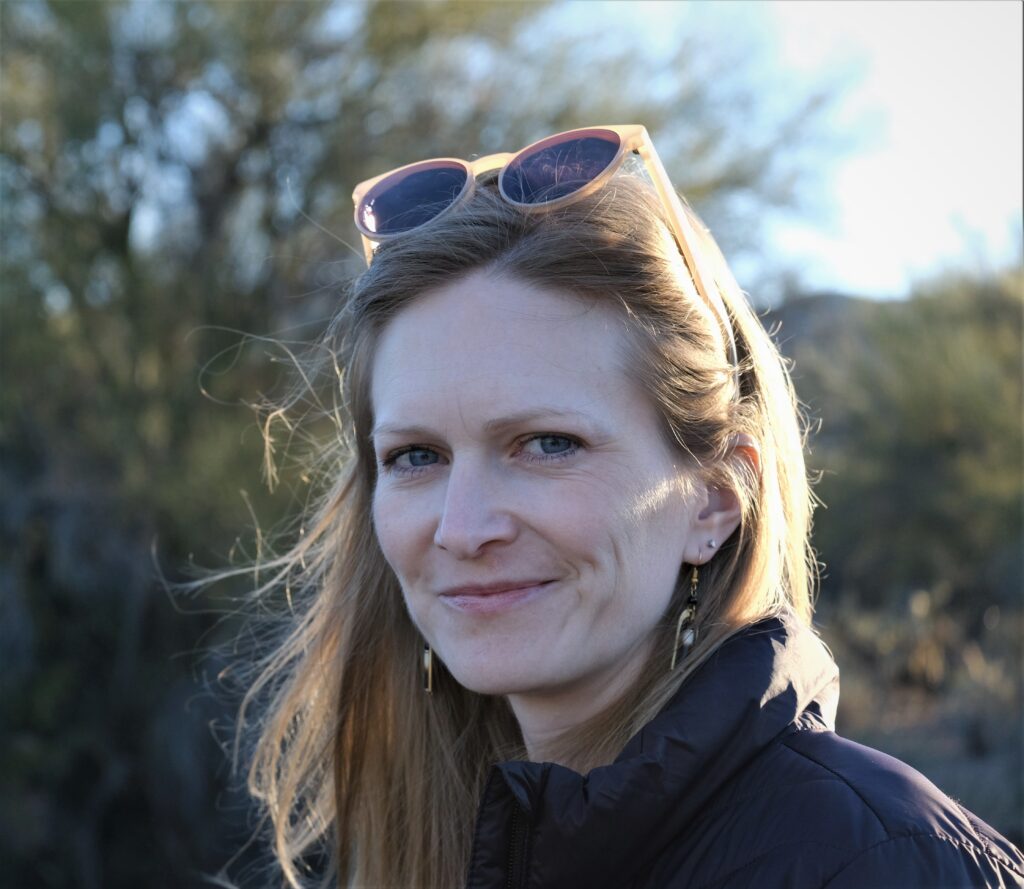
Translator Kelsi Vanada.
[Vanada]:
How did you come to write Agustina Paz? Tell us a little bit about its historical setting and what interests you about this period in Argentina’s history.
[Naón]:
Agustina Paz is based on a historical event from the early 19th century in South America. It was a period of civil wars that followed the wars of independence. Agustina Paz was the daughter of an important politician in the province of Tucumán, now part of Argentina. The story goes that she saved the life of a convicted enemy of the government by asking for his hand in marriage. With this man, José Segundo Roca, Agustina had several children: One of them was Julio Argentino Roca, who came to be the builder of the modern state in Argentina, the unifier of the nation and a two-time president of the country, and also a perpetrator of the indigenous people, among other famous (and infamous) distinctions. He’s a really important important figure here in Argentina.
My work in this novel is driven by an interest in how the history of our region remains alive in, and in tension with, the way we speak our language, and the way we fight and work together and imagine through it. I have published three other books centered on Roca and his generation, always experimenting with a different literary genre. It is a long-term project, still going on, which I call Los Roca y los yo, which could be translated as The Rocas and Myselfs. The perspective I try to explore in each chapter or artifact of this long project has to do with the intersections between the national and the personal, between country and family, since I’m also a descendant of this Roca on my mother’s side.
[Vanada]:
I didn’t know that part about your own family!
[Naón]:
It’s a secret I only tell in some interviews.
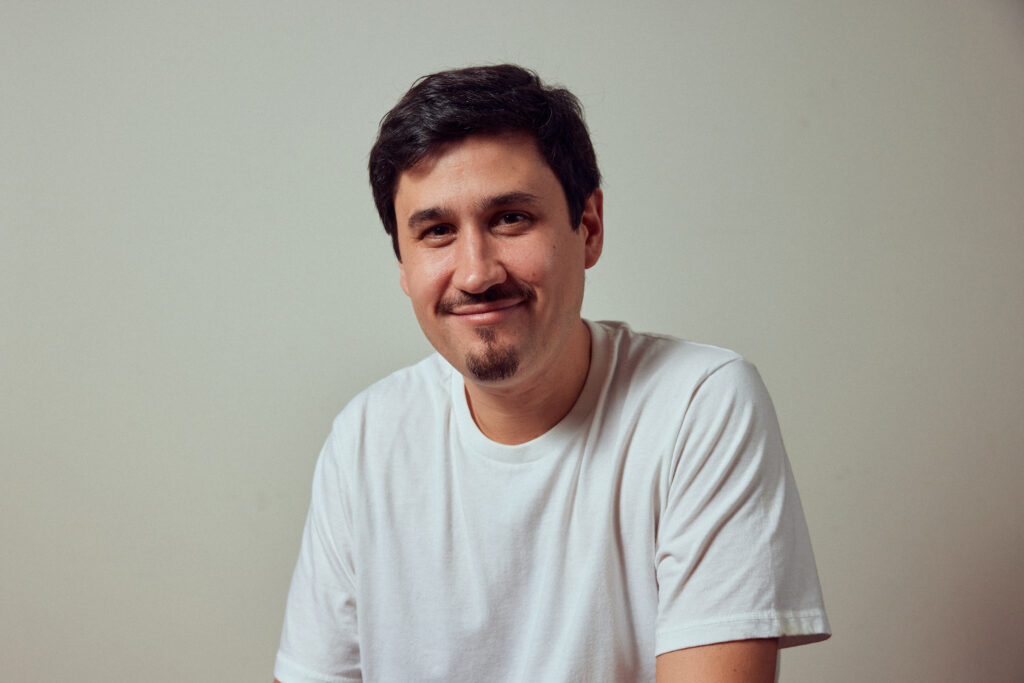
Author Emilio Jurado Naón. Photo credit: Ioni Epelbaum
[Vanada]:
Reviewers often comment on the poetic nature of your prose, and for a translator like me, who usually works on more contemporary language, it was a very good challenge to translate your beautiful and complex sentences. Can you share more about the historical voice, or the language of the novel?
[Naón]:
Thank you. And it’s true, many reviews of my work underline this poetic (or even wordy) style. This observation, I always quote one of my favorite Argentine writers, Ricardo Zelarayan, who maintained, being both a fiction writer and a poet himself, that the distinction between verse and prose is ultimately unhelpful. Both for writing and for reading. In his endearingly politically incorrect way, he used to say that any fiction writer who did not read poetry was semi-illiterate.
When it comes to construction of a historical voice, a wide lexicon can be very effective, you know, or perhaps it is the other way around: An 18th century plot is the best excuse I have to use a cluster of old words. What contradicts this is that the language of Agustina Paz, I think, only appears historical at first glance. The characters, plot, context, and settings belong to a historical past. But the language soon reveals its own anachronism. And I think that this linguistic anachronism is one of the places where poetry achieves some of its powerful effects.
[Vanada]:
And the language of this work is very unique because there are some older words, yet Agustina also sounds… She’s approachable; she’s somehow contemporary.
[Naón]:
There are some words or some phrases, idiomatic phrases, which sound almost ridiculously contemporary, or colloquial to Buenos Aires, today. Also, there is a tension between the language in Tucumán and in Buenos Aires, which are really far apart; we have different ways of speaking, different accents. Taking language far from today’s conversations also creates an anachronism.
[For the feminine voice of Agustina], I tried to study some novels with feminine characters: Carson McCullers, Clarice Lispector, and Ágota Kristóf. They were really useful in trying to make a dry voice for this character.
KELSI VANADA is a poet and literary translator. She is the author of the collection Optional Saint (Bench Editions) and the chapbook Rare Earth, and the translator from Spanish and Swedish of seven books of poetry and creative nonfiction. Kelsi was a 2024 NEA Translation Fellow and holds MFAs from the Iowa Writers’ Workshop and the Iowa Translation Workshop. She is the Senior Program Director of the American Literary Translators Association in Tucson, AZ.
EMILIO JURADO NAÓN was born in Buenos Aires in 1989. He holds a degree from and is a professor of Letters at the University of Buenos Aires (UBA), and co-directs Rapallo, a magazine and publisher of poems and essays. In the ongoing series “Los Roca y los yo,” he has published the books Tópico de los dos viajeros (Palabras Amarillas), Zanja grande (Slimbook), Los Pincén (Omnívora), and Agustina Paz (Emecé). Jurado Naón coordinates the Hurlingham City Literary Workshop and is co-director of the American Poetry Festival in Hurlingham (FAPH).