
Don’t Let Childhood Be Erased In Gaza
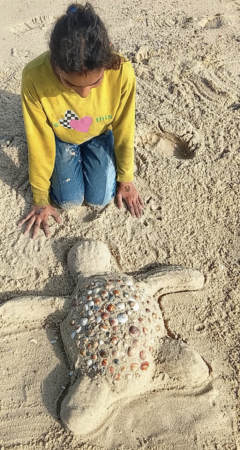
On Gaza’s beach, a young girl kneels beside a sand turtle she shaped with her hands and decorated with seashells. All photographs by Shams Mazen Rajab.
Every day, thousands of children wake in tents instead of homes, stand in lines for water instead of classrooms. Play has become a rare luxury, and education has turned into an act of resistance. This is not a passing crisis—it is an ongoing theft of an entire generation’s dreams.
In a small tent in Deir al-Balah, my thirteen-year-old sister Dima balances a notebook on her knees while my eleven-year-old sister Malak leans closer to listen. My seven-year-old brother Mohammad waits impatiently for his turn to recite the alphabet. This is not a classroom but a shelter, surrounded by the noise of aid trucks and queues for water. Childhood here has been stolen, replaced by survival.
My siblings spend long hours in lines instead of classrooms. They invent games from broken objects. My mother, once a teacher at home, has turned into a teacher in our tent. She gathers them around, opens an old notebook, and begins lessons as if she were running a small classroom. Without desks, blackboards, or textbooks, she insists that education is a right that cannot be stolen. For her, every lesson is an act of resistance against displacement.
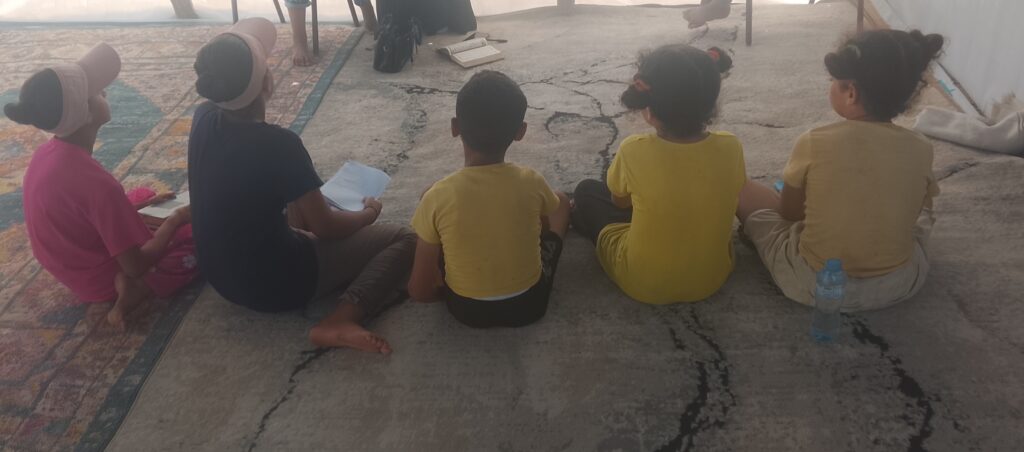
Inside a tent classroom in Deir al‑Balah.
I watch Mohammad raise his hand eagerly to recite letters. Dima struggles to write a full sentence, and Malak smiles when she solves a math problem. They continue to resist erasure by insisting on learning.
My siblings’ story is not unique. Childhood is stolen daily in Gaza, not only through the loss of schools and homes but through the constant sense that the future is uncertain. Learning in tents rejects the idea that this generation will grow up without knowledge or hope.
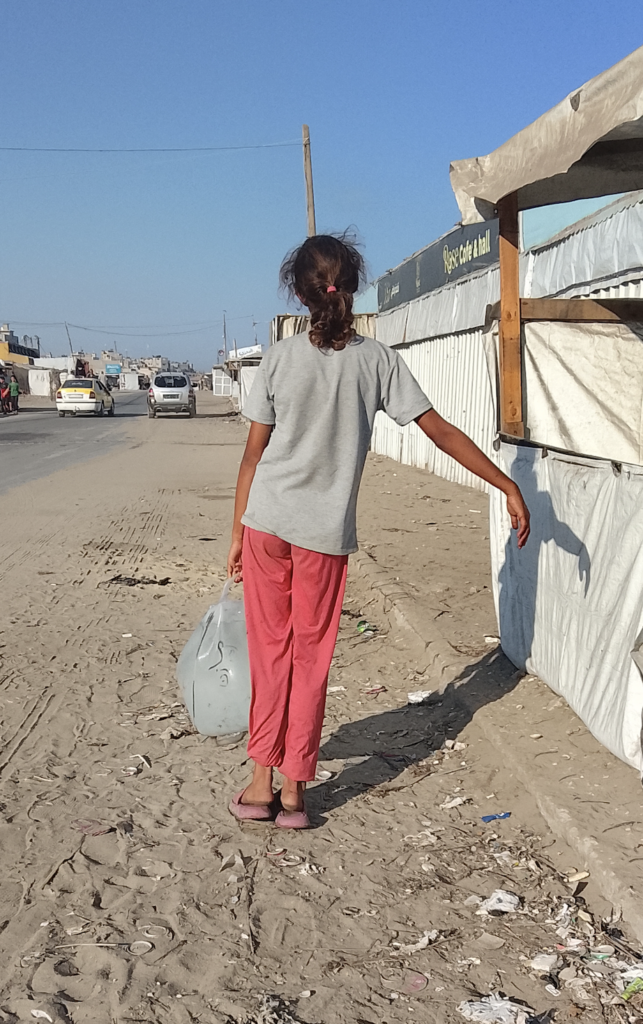
At a water distribution point, a young girl carries a gallon of drinking water. Her steady steps express the daily struggle to secure life’s most basic needs, yet her presence embodies dignity and resilience under siege.
Having completed my degree in English language and teaching methods, I try to teach my siblings English because it is the language shared across the world. English opens a small window to the outside, gives them a tool that might one day help their voices be heard. Every word they learn is a tiny step toward breaking the isolation imposed by the siege.
Yet this resistance alone is not enough. The world must see that Israel is stripping childhood from an entire generation of Palestinians.
Childhood in Gaza is not a statistic but a life stolen day by day. Behind every number is a real child, with a postponed laugh and a broken dream. I call on the world not only to witness but to act—to protect the right of Gaza’s children to education and to childhood.
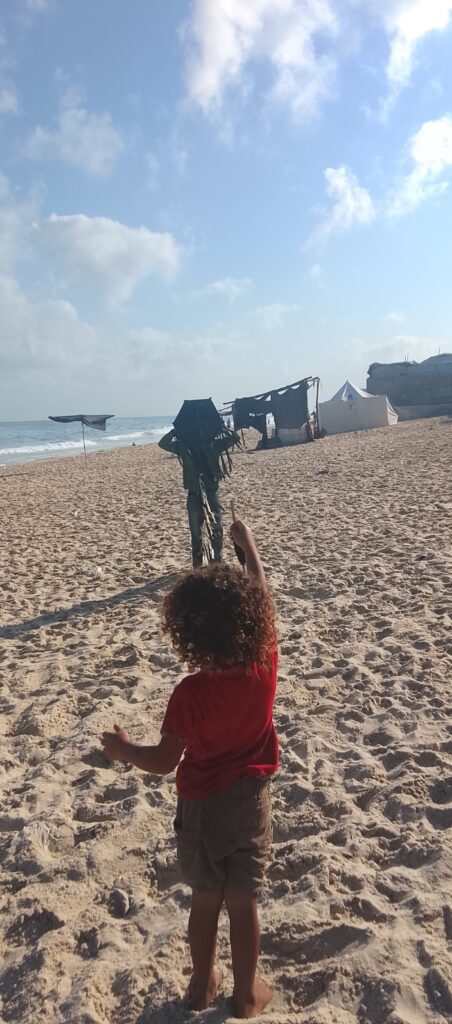
On Gaza’s beach, a young girl tries to fly a handmade kite. Behind her, tents mark displacement. She reaches for freedom in the open sky.
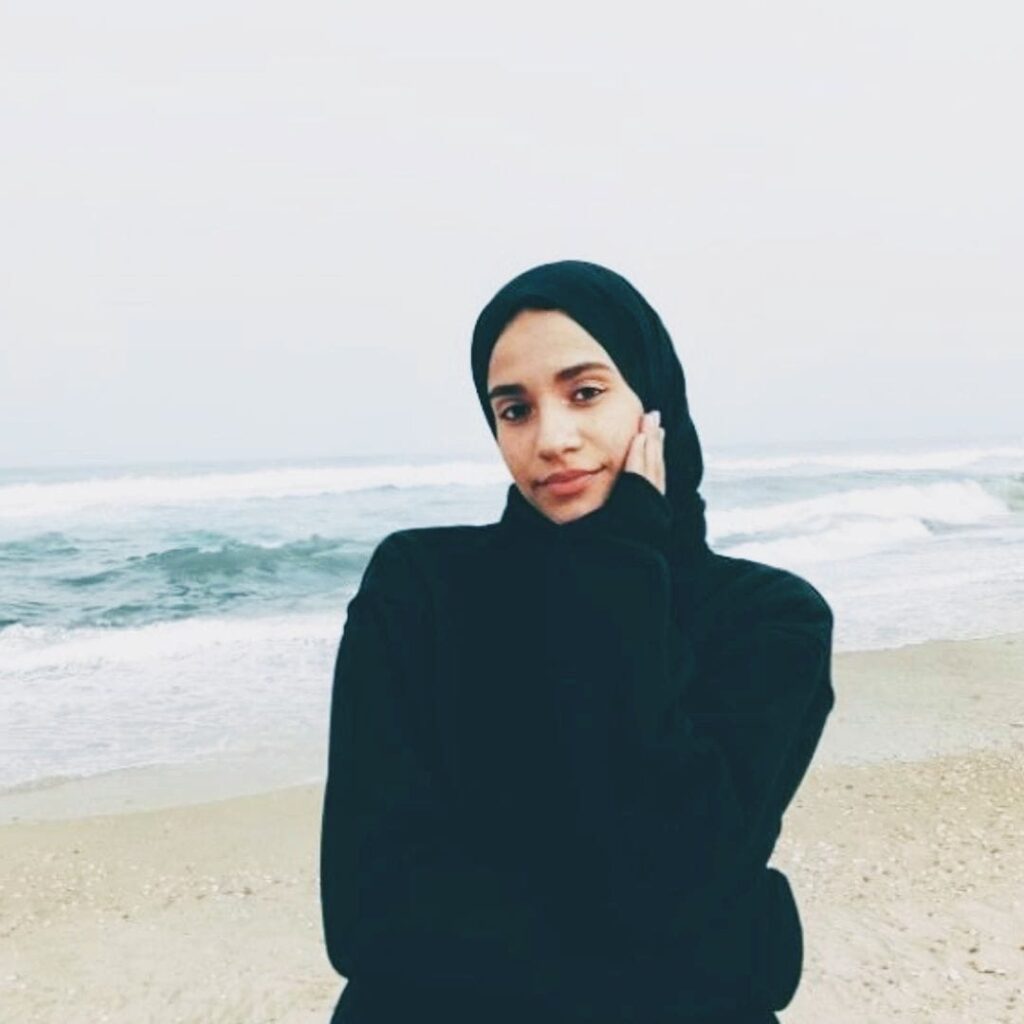
SHAMS MAZEN RAJAB is a twenty-three‑year‑old writer, translator, poet, and essayist from Gaza. She holds a Bachelor’s degree in English Language and Teaching Methods from Al‑Aqsa University, and has completed a Continuing Education Certificate in Equality, Diversity and Inclusion Awareness at University College Cork, Ireland. She is the author of a poetry collection Voices That Remain, and a zine in the series Gaza Speaks: When the World Falls Silent. Her essays have been published on We Are Not Numbers and Brief Encounters.