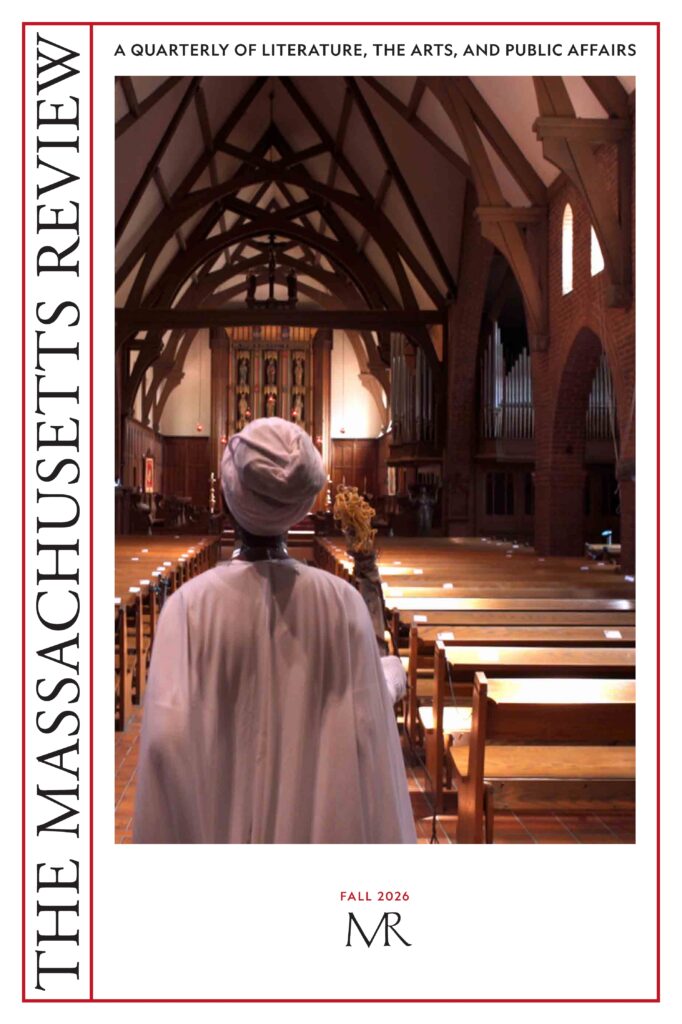

Interview with Charlene Tzu Hsien Huang
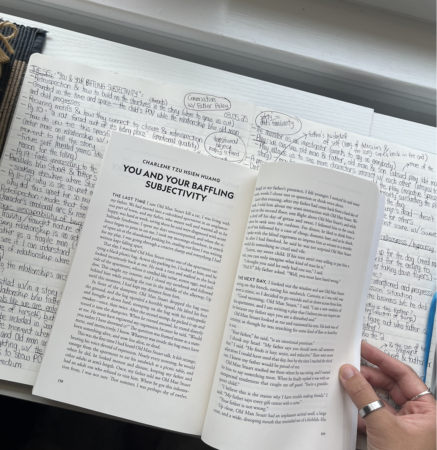
Who have been the most influential writers in your life? The most influential stories/collections?
- Lorrie Moore –– Who Will Run the Hospital?
- Laura van den Berg –– I Hold a Wolf by the Ears
- Elena Ferrante –– The Days of Abandonment
- Evan S. Connell –– Mrs. Bridge
- Anna DeForest –– Our Long Marvelous Dying
- Yiyun Li –– “All Will Be Well”
- Joan Silber –– “Two Opinions”
- Rebecca Curtis –– “The Christmas Miracle”
- Alice Munro –– “Wenlock Edge”
- Miranda July –– “Something That Needs Nothing”
- Victoria Hulbert –– “Both Ways”
- A.M. Homes –– “Do Not Disturb”
- Jhumpa Lahiri –– “Hell-Heaven”
- Haruki Murakami –– “Barn Burning”
What’s been inspiring you lately?
Lately, I have been running more consistently. This is really my cordoned off time, where all I have are my body, my thoughts, and no obligations to others. After graduate school when I began teaching, I realized that so much of the day belonged to other people. Running became the one hour that didn’t. Spending time only for myself, I think, is one of the kindest acts of generosity I could offer for myself.
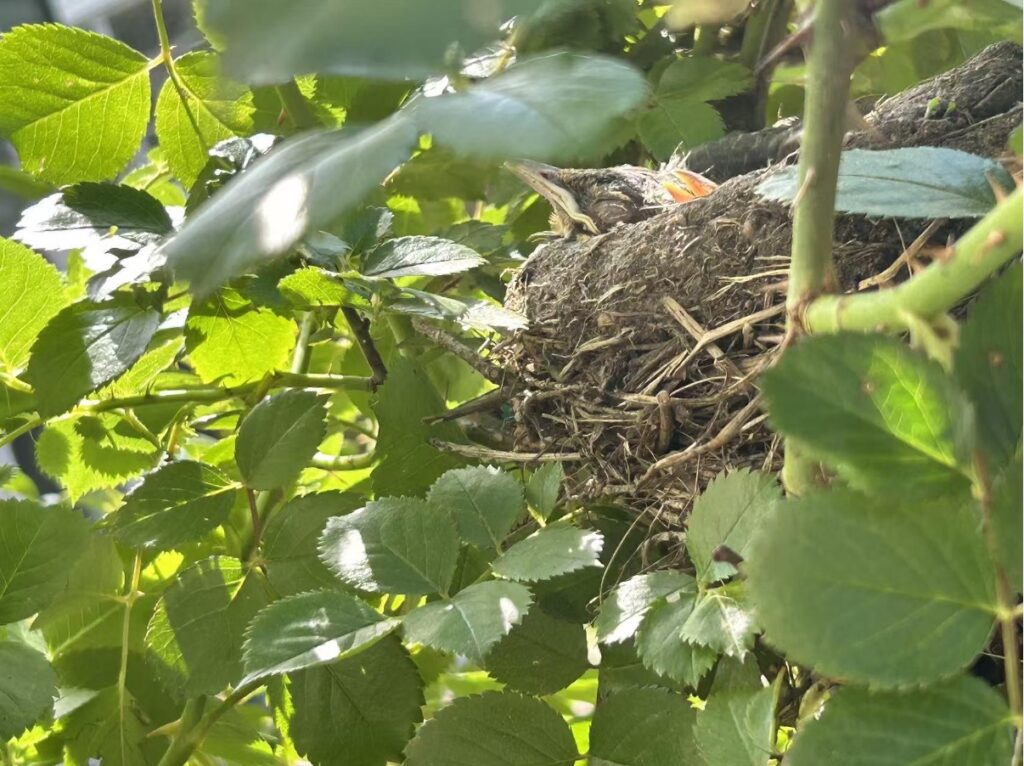
I also think running is one of the best ways to not feel too isolated in my world. It’s difficult to feel entirely alone when you’re running. I bump into neighbors, and I get to pet dogs, which brings me a lot of joy. I have also been photographing all the small things I witness on my runs. For the past few weeks, I have been photographing a bird’s nest tucked inside a rose bush. Watching the hatchlings, all beaks and noise, grow larger day by day, or the mother returning to feed them, has been so incredibly touching.
One of my professors once said that to write is to pay attention. I think about this often when I run. Watching the birds over time has shown me how much a story, too, depends on sustained attention. Every few days, the nest becomes a slightly different place, and I know I am not only capturing a moment in their lives, but also a moment I know will find its way into a story.
Tell us about your writing process, generally and for “You and Your Baffling Subjectivity.” Is the story accomplishing what you set out for it to do?
I always begin with voice. Before I even know what a story is about, I want to know who is speaking and how they might see or navigate their world, both internally and externally. I rarely begin a story knowing what it is about, and I almost never know where it is headed. This uncertainty is part of the pleasure. If I understand or plan a story too early, I feel stuck, and I feel like I have lost my interest in developing it. I prefer to write about something that interests me and see if it can open into another sentence. A lot of this is following my gut instinct and trusting that the characters know something more than I do.
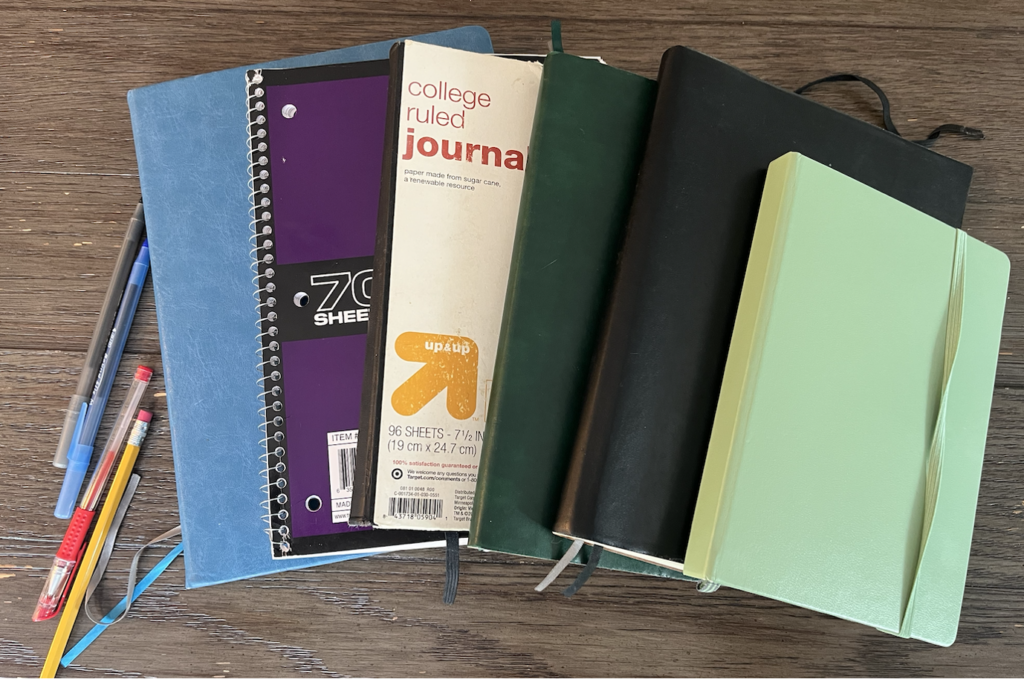
For years, I’ve kept notebooks that I use to record many things I encounter, observe, hear, read, or think of. It is obviously impossible for me or anyone to keep everything in our minds, so to make sure I preserve these snippets of conversation on the train, odd turns of phrase––including “the Ratman Society,” “emotional prostitute,” or “acute Solitude Syndrome”––or even moments that feel too specific to disappear. I rarely know what any of them mean when I write them down. I only know that they are fun and something I want to put in a story.
Most of my drafts are built from these fragments. When I begin writing, I like to flip through my notebooks, find things that feel disparate, and put them beside one another to see what kind of pressure they create. Very often, the story comes from this friction and collision of ideas.
In my earliest draft [of “You and Your Baffling Subjectivity”], there was no Old Man Stuart. Sweet Pea belonged to the father, and the narrator accidentally killed the dog. The story really gravitated towards the father’s capacity––or inability––to forgive his daughter. One of the things I felt was that it needed another consciousness to unsettle this relationship. Around that time, I was leafing through my notebook and came across a word I had written: “Ratman.” Old Man Stuart arrived almost immediately afterward. Looking back, I don’t think I invented him so much as I recognized that he had been waiting for the story before I knew I needed him.
By the end of the second draft, I realized I had been writing less about fathers and daughters than about the limits of perception. We spend so much of our lives believing we know the people closest to us, when, in reality, we are constantly inventing and assembling partial versions of one another. Every character in the story is, in some way, trying to cross that distance—and failing, or almost succeeding.
So no––the story didn’t accomplish what I thought it would when I began, but it did accomplish something I couldn’t have anticipated.
What’s your favorite line from “You and Your Baffling Subjectivity”?
“‘Your father,’ he said, ‘is an emotional prostitute.’”
The final section is set tonally apart from the rest of the piece, and (to me) transforms the story entirely. How did you decide to go this route, rather than ending on the image of the narrator’s adult father?
I really did not plan to end the story in such a surreal, slanted space. In my first and second drafts, I assumed the story would remain grounded in the apartment building and in the narrator’s childhood. The final section actually arrived quite late in my process, and it wasn’t something I reasoned my way toward. But when I stumbled upon it, it felt strangely inevitable. I remember thinking, Oh, this is where she has been telling the story from all along!
I think this is often how endings work for me. I like the feeling that the story knows something I don’t, and that my job is to keep following it until it reveals what it has been quietly moving toward. Sometimes this means the ending slips into a register I couldn’t have anticipated.
The final section offers us a narrator who has finally departed from her childhood but has not escaped it, at least not fully. She is still, in some ways, under the spell of the adults around her, and she still lives with the haunting of the adults’ obsessions and theories and delusions.
I would also argue that the adult narrator does not necessarily understand more than she did at twelve. That feels very true to life, the fact that we tend to spend our lives revising our understanding of the people who formed us, only to discover that they remain, in some essential way, mysterious. The same is probably true of ourselves. Our subjectivity never quite settles into something we can fully capture. In fact, it will always be somewhat baffling.
CHARLENE TZU HSIEN HUANG is a writer originally from Taipei, Taiwan, and is now based in Medford, MA. Her work has received the 2023 Epiphany Magazine Prose Breakout! Prize as well as the Johns Hopkins’s Stephen Dixon Literary Prize for graduating seniors. She is presently at work on a linked short story collection and a novel.