
Interview with Anna Yin
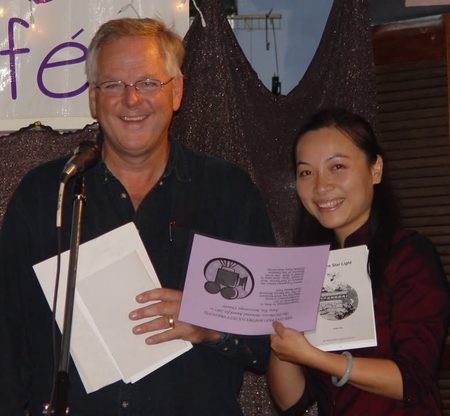
Ted Plantos Memorial Award photo with judge John B. Lee, 2005.
Tell us about your relationship to translation, specifically between Chinese and English translation.
From a very young age, I felt that I did not quite belong, I became independent, sometimes a little wild. In middle school, I began writing martial arts novels and poetry in my mother tongue, though I often abandoned them because they felt artificial.
After immigrating to Canada in 1999, I focused on IT work and family responsibilities. To improve my second language, English, I read children’s stories to my son. One night in 2003, after reading The Emperor’s New Clothes, a poem came to me. In it, a child asked me, “Who are you?” The question made me realize how lost I had become. Yet I was also happy: I had written my first poem in English. Through it, I saw a light, as if through a slightly open door, and I knew I had found my passion.
I began writing and reading more poetry in English, initially to improve my language. I rarely translated because I wanted to focus on developing my English voice. In 2004, after a ten-year-old Chinese girl was kidnapped and killed in the Greater Toronto Area, I wrote “Toronto, No More Weeping,” a poem mourning her and calling for hope and peace. It won 2005 Ted Plantos Memorial Award and was broadcast by CBC Radio in 2005. Chinese-language media then asked me to translate it into Chinese, marking the beginning of my translation practice.
In 2006, I co-founded North America Maple magazine and edited its English-language column, featuring Canadian poetry in Chinese translation and Chinese poetry in English. More Chinese-language magazines later invited me to translate the work of Canadian and Chinese poets. Although I continued to focus on writing in English, translation gradually became an essential part of my literary practice.
Looking back, writing in English helped me find a new voice, a sense of belonging, and new meaning in my life. Translation has allowed me to connect that voice with my Chinese roots and to carry many other voices across languages and cultures. For me, translation is no longer simply a bridge between two languages, but a creative space where languages, cultures, and ways of seeing meet and create something new.
Do you have any non-literary talents?
My other passion is table tennis. Like poetry, it is something I can pursue throughout my life. Both have become lifelong passions and goals: poetry keeps my mind wild and sharp, while table tennis keeps my body fit and agile. Another reason I love the sport is my son, who is very good at table tennis. I hope that one day we can form a strong team and compete together.
What’s your relationship to Yen Ai-Lin? How did you come to translate “Black Box”?
Yen Ai-Lin is a Chinese poet who lives in Taiwan. When she emerged as a pioneering poet in her twenties, I was still living in mainland China. I was struck by her bold images and metaphors, never imagining that one day I would meet or translate her work.
In 2023, I was invited by Live Encounters Poetry & Writing to guest-edit a special bilingual English-Chinese edition. I invited Ai-Lin through Facebook to send me two poems to translate. She liked my translations and suggested that I translate her entire book, Devouring the Time, for a grant application. In 2024, I met Ai-Lin in Taipei and later translated twenty poems from the book. “Super Vendor” was published in Queen’s Quarterly, with several others appearing in Voice & Verse Poetry Magazine.
Ai-Lin trusts my translations and rarely suggests changes after I send her my versions. Finding good homes for translated poems, however, takes time and effort. I need to understand each magazine’s aesthetic and editorial preferences. I particularly love the strange and profound “Black Box,” and was delighted when my translation was accepted by The Massachusetts Review.
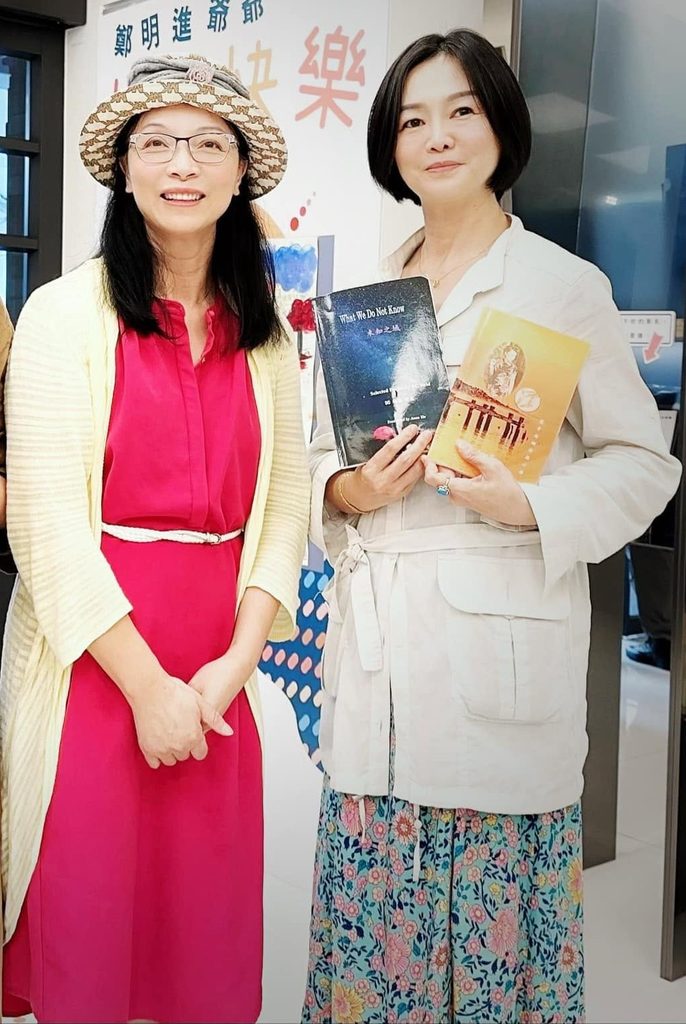
Yin and Ai-Lin, taken in Taipei, 2024.
What is your favorite thing “Black Box” is doing?
First, the title is impressive. It feels like a puzzle that invites us to solve it. The images in the poem are raw and dark, almost like a nightmare or a suspense film. Then the poem takes us further, unmistakably revealing the hidden, instinctive side of human life—the boundary between human and beast.
What are you working on currently?
I am currently working on the Borderless Poetry Translation Project. Through online collaborative workshops and dialogues, poets and translators discuss selected poems, gaining deeper insight into one another’s languages, traditions, and perspectives. The project will culminate in a bilingual anthology featuring poems by 40 poets, my translations, and essays reflecting on the translation process. I aim to publish the anthology as a free downloadable e-book for the public by the end of 2026.
Here, I would like to share one of the essays I wrote for this project about translating a Chinese poet’s work, which was published in Transformation Review.
What other transformative translation projects have you been a part of?
Yan Li was born in Beijing. He began writing poetry in 1973 and painting in 1979. That year, he became a member of the pioneering Stars Art Group and the influential literary circle associated with Today (Jintian). In 1984, he held one of the earliest solo exhibitions of avant-garde art in China.
After moving to New York, Yan Li founded the poetry journal First Line in 1987 and served as its editor-in-chief until its suspension in 2000. He revived the journal in 2020 and continued editing it until his passing. He also served as President of the Overseas Chinese Writers Association. Over a career spanning more than five decades, he published numerous volumes of poetry and painting and became a distinctive voice in contemporary Chinese literature.
I began translating his poems four years ago. By 2025, I had translated 55 poems, with 17 published in literary journals in North America, the UK, and Hong Kong, including Queen’s Quarterly, Denver Quarterly, Modern Poetry in Translation, Voice & Verse Poetry Magazine, and Cha. We had hoped eventually to find a good home for the complete selection.
After Yan Li passed away, I decided not to wait any longer. In July, I published a memorial edition of his selected poems with my translations and made it freely available for download. I hope that, in this way, his work will reach more readers and live longer.
I have also shared the edition with U.S. Poet Laureate Arthur Sze, who is both a poet and translator and is actively involved in promoting translation. His warm response meant a great deal to me.
My regret has taught me something: while poems may need time to mature, people and opportunities do not always wait. Sometimes, we have to trust the work and let it go into the world while we still can.
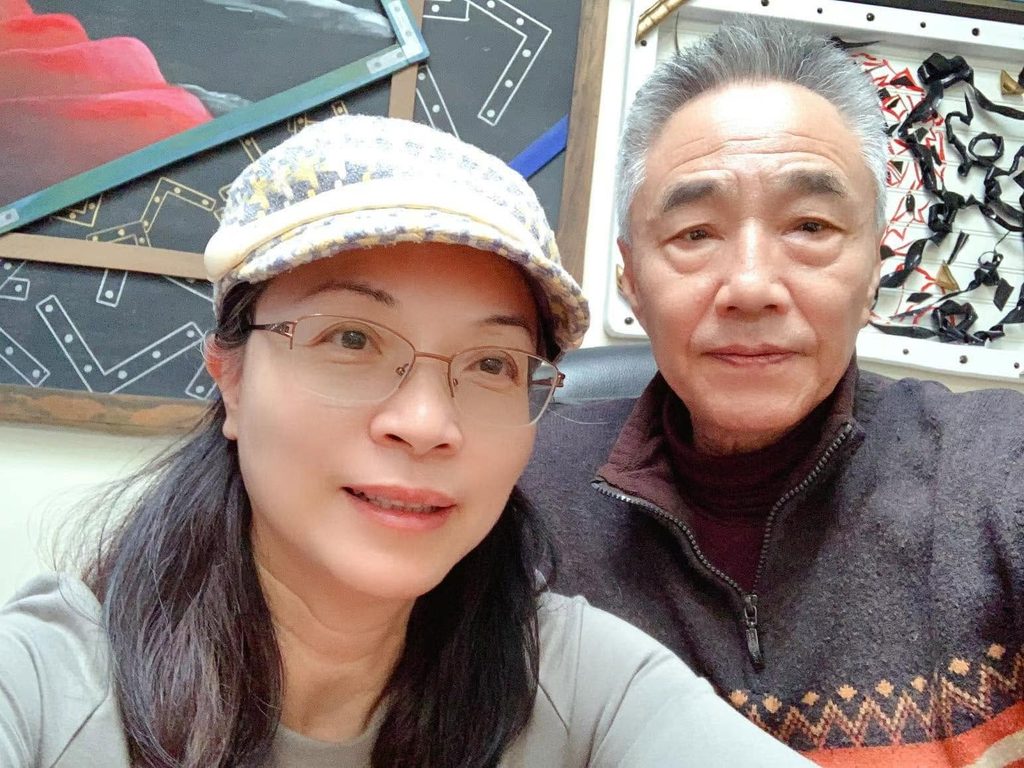
Yin and Yan Li (respectively), taken during an interview at Yan Li’s home in New York, 2022.
ANNA YIN was Mississauga’s Inaugural Poet Laureate (2015–2017) and is the author of seven poetry collections and four books of translations. She is the recipient of the 2005 Ted Plantos Memorial Award, three MARTY Awards, two U.S. scholarships, and multiple grants from the Ontario Arts Council and the Canada Council for the Arts. Her poems and translations have appeared in Queen’s Quarterly, ARC Poetry, The New York Times, China Daily, CBC Radio, Literary Review of Canada, and Modern Poetry in Translation, among others.