
Portal of Return
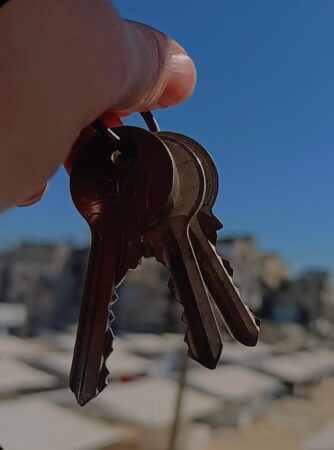
Photo: The keys to our house that was destroyed in Northern Gaza. Courtesy of the author.
When I was ten years old, I was studying at the Beach Elementary School in Gaza. My teacher, Rahma, asked us to write about our original villages. “Go home,” she told us, “and ask your grandparents who survived the Nakba to tell you their stories.”
That afternoon, I found my grandfather in the backyard of my childhood house in Al-Sheikh Radwan, northwest of Gaza City center, watering the guava tree he loved dearly. It was one of many trees he had planted around our home. He spent most of his time tending them.
I asked him to tell me about the day he, his parents, and his siblings were forced to leave our family’s original hometown Beit Jerja.
He continued watering the tree quietly.
“I was very young then. So young that many details have become blurred in my memory. But there is one image that never leaves my mind, crowds of people fleeing for our lives, escaping death. Exhausted, we carried whatever belongings we could on our heads, in our hands, and on the backs of the livestock walking beside us – the animals we had managed to bring with us from our villages.
“We had a small house, yet it felt greater than palaces. We had land, sheep near our home, and trees stretching as far as the eye could see across the village of Beit Jerja.
“I was five years old when the settlers attacked the village. My mother packed what she could carry on her shoulders, and we, my father, my siblings, my older brother Mohamed’s wife, our neighbors, and many of our fellow villagers walked all the way to Gaza … carrying whatever we could for that long trek alongside some of our livestock… leaving behind our land, our trees, everything.
“That day, we took the house key with us and said: ‘We will return.’
“And here we are today, still praying for that return.”
Nakba after Nakba, Palestinians continue to hold onto one unbroken promise: we will return.
The key bears testimony to homes once full of life, and to families who left believing they would come back within days.
From the villages our grandparents were driven from in 1948, to our own destroyed homes in 2026, the story repeats itself. Loss. Displacement. Survival.
Yet somehow, a promise passes from generation to generation, an heirloom woven into our daily lives. In the old keys hanging on walls. In the names of villages spoken by our grandparents: Beit Jerja, Barbara, Hiribya, Simsim, Najd.
In the stories told to children before sleep lives the certainty that no occupation can erase memory.
Even after decades of ethnic cleansing, Palestinians continue to inherit and pass on the same dream that one day we will walk again freely through the streets of Palestine.
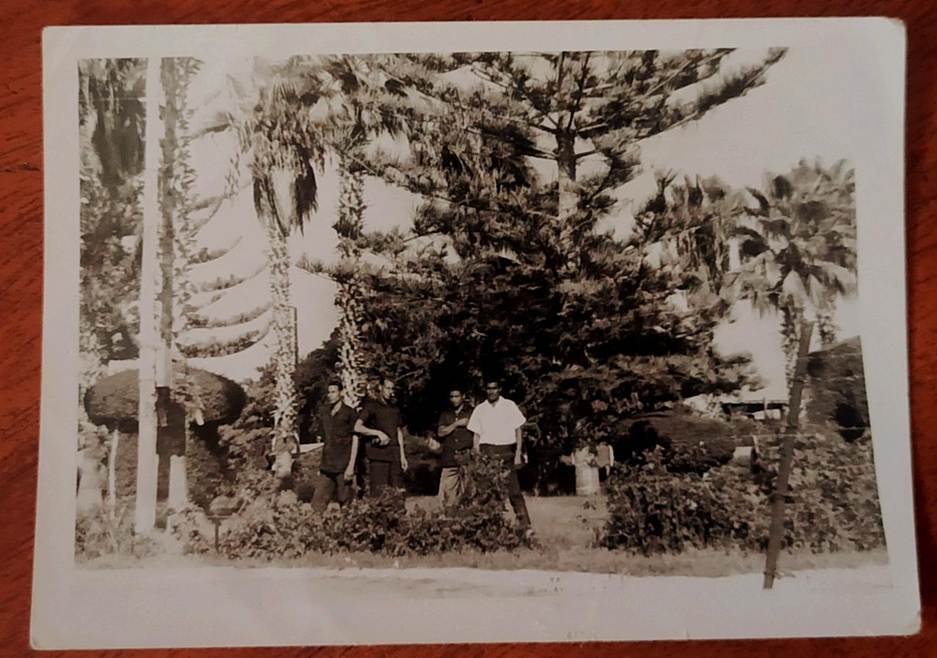
Photo: My grandfather in his youth with his brothers—from an old family album found by chance after our displacement
“Tomorrow, we will return.”
Our grandparents who were forced from their towns and villages repeated this for decades.
That “tomorrow” still lives, always, inside Palestinian hearts… always!
Most of us in Gaza are refugees.
Gaza was not the birthplace for most of our grandparents. Our roots stretch far beyond its borders, reaching into towns and villages across historic Palestine. Zionist militias and the army stormed our villages, spread terror among civilians, and forced our families out.
Some remained. Others gathered what little they could carry and walked away from their homes believing the exile would be temporary.
And then came another catastrophe.
This time, it was our homes that disappeared.
We too left suddenly, clutching keys in trembling hands as we fled Israeli bombs. We returned later searching for walls, rooms, memories, only to find rubble, ashes, and silence.
And yet, even now, the meaning of the key is unchanged.
It was never only about a house, or villages left behind.
The key became belonging.
The key remains a quiet, stubborn reminder that somewhere beyond borders, there is still a place that carries our names within its soil. This is an inheritance too sacred to abandon. The tears in our grandparents’ voices whenever they spoke of orange groves, olive trees, old neighborhoods, and homes they expected to return to within days, water the tomorrow Palestinians still await.
From our grandparents’ keys to the ruins of our homes, the promise of return lives within us.
The key is our refusal to forget. Our refusal to disappear. Our refusal to allow an entire people to be erased from their own story.
We memorize the names of villages we have never seen as though they are part of our bloodstream. We love homes we never lived in, but inhabit through the portal of our grandparents’ love for them.
And now, many of us carry keys of our own. Keys that no longer open doors – for many of those doors no longer exist. Keys to rubble, yet keys we cling to as our grandparents did, because hope survives in the smallest things.
The story of Palestine is still being written. Through unending Nakba, the dream of return continues to rise again and again from beneath the destruction.
Palestine will be free. We will walk its streets again, not as refugees, but as people finally returning home.
Insha’Allah.
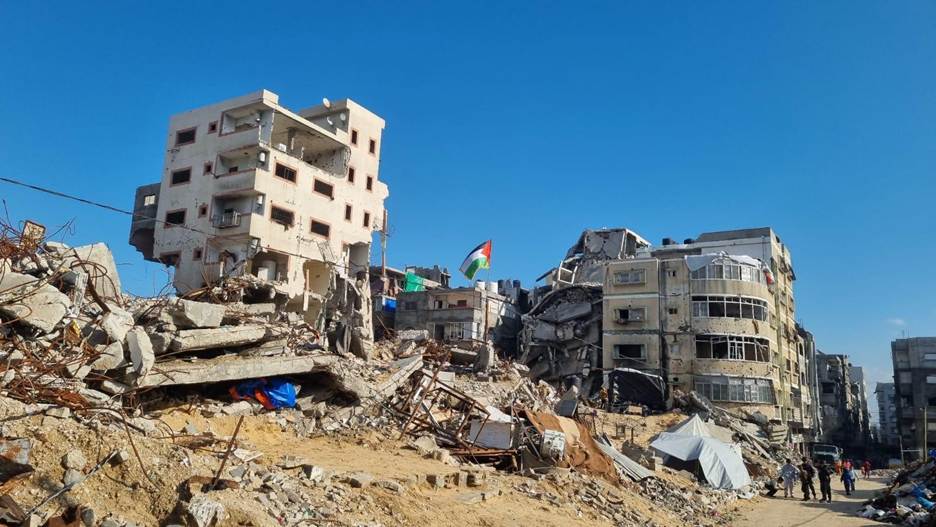
Photo: The Palestinian flag standing amidst the rubble. Courtesy of the author.
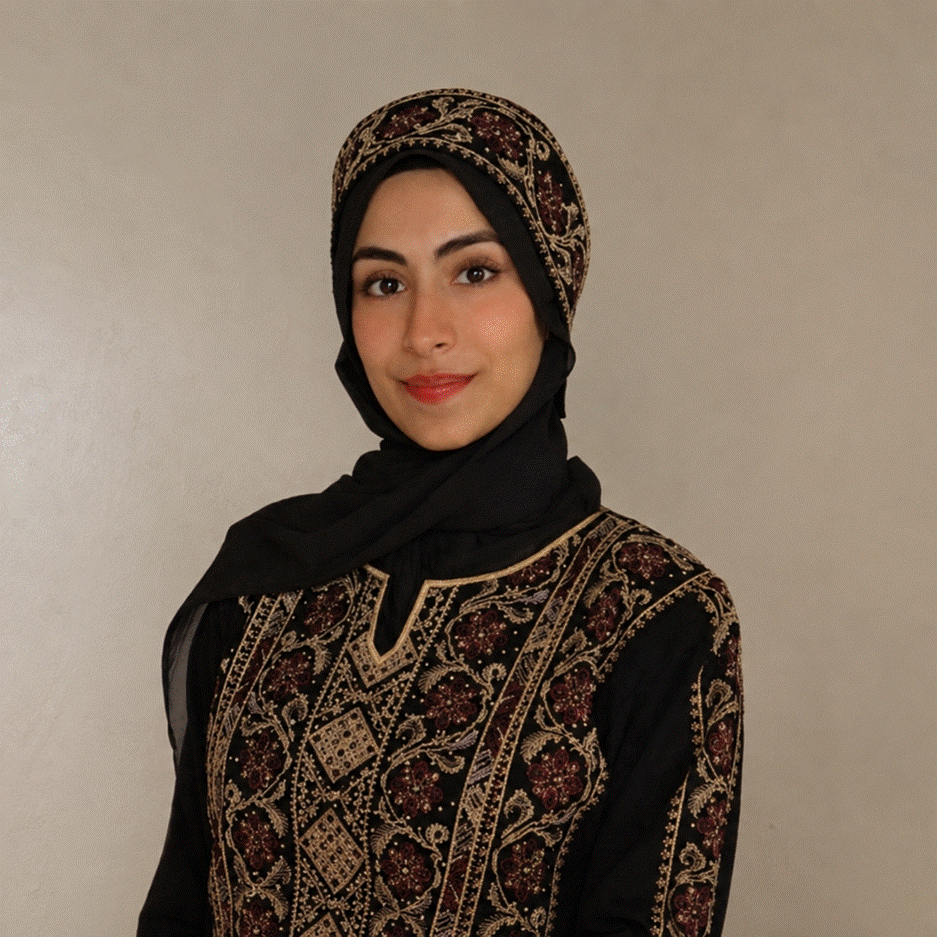
Asma Abu Hasanein is a Palestinian author, artist, and poet based in Gaza. She holds a degree in English Literature. She participated in the British Council’s Resilient Voices project, crafting poetry and essays rooted in lived experiences.
To support Asma and follow her work: