
Interview with AJ Javaheri
Tell us about your relationship to translation, specifically between Farsi and English.
I always believe that I didn’t find translation, it was translation that found me somehow. When I was getting my bachelor’s degree in English Literature, I felt like I was enjoying my literary translation assignments a little too much. Later on, when my professor suggested I start working with his publishing house and gave me my first book to translate, suddenly I couldn’t think of doing anything else with my life. I used to translate all kinds of works into Farsi when I was still in Iran but I could always feel this large void when it came to Iranian literary pieces being translated into English. The rich literary world of our young contemporary authors barely ever appeared beyond the borders. My wish was to start translating these works as much as I could, and this is what my entire life and career is all about now.
What are you working on or looking forward to?
I have two finished manuscripts right now that trying to edit and pitch. I made a pact with myself to not start any new projects until everything I already have is published.
My first book-length translation into English will be out in the spring. It’s a contemporary novel by an Iranian author who has never been translated before. That was a huge milestone for me and just thinking about it gives me all the energy I need to get through the day. On the other hand, as a PhD student approaching my comprehensive exams, my life is a constant battle of excitement and panic, hitting me with different emotions one after the other.
What did you want to be when you were growing up?
Interestingly, I never had an image of what I would be doing when I grew up. I don’t remember ever expressing a wish of becoming a specific person or engaging in a certain occupation. I feel like life has always been happening to me, taking me in different directions. When I became very serious about learning English at around the age of thirteen, I fell in love with the language so deeply and quickly that I said whatever I do when I grow up, it has to have something to do with English. That determination led me to majoring in English Literature and then discovering translation. It was only then that I knew exactly what I wanted to do for the rest of my life. Right now, I just want to be a full-time translator, showcasing as many pieces of Iranian literature as I possibly can. I still don’t know, and can’t decide, what I would become if not a translator, but every day I get more confident that I made the right choice.
How did you come to translate Morteza Barzegar? How involved was he in the translation process?
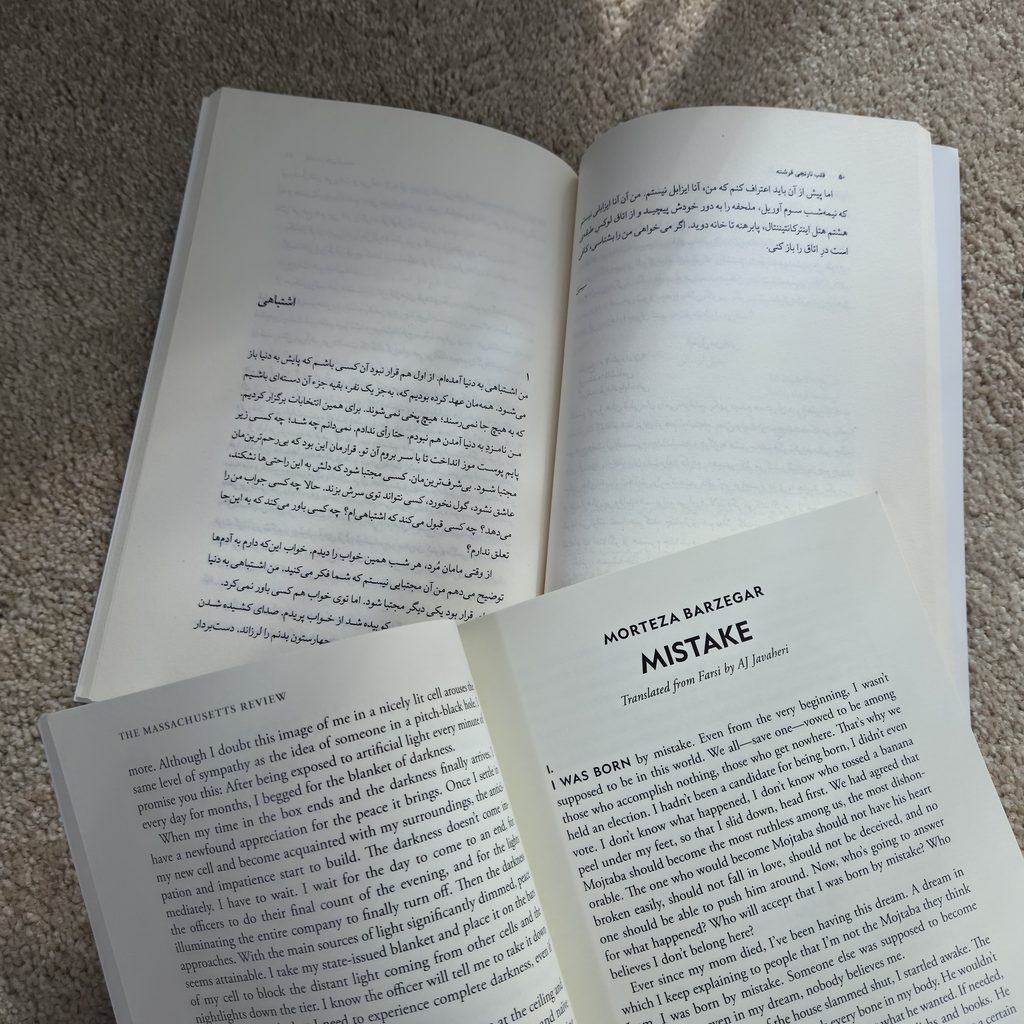
“Mistake” is a part of Morteza’s first short story collection The Orange Heart of the Angel. When I read it many years ago, I immediately became obsessed. The imagery and the impact of the stories in that collection stayed with me for a very long time. Years later when I was looking for a translation project, I kept going back to his book until I finally gathered up the courage to contact him and ask for his permission. You know how they say don’t meet your heroes? With Morteza it was the exact opposite. He was everything I imagined him to be: immensely kind, respectful, calm and generous.
Translators who work with living authors know that it’s always a blessing when the author stays out of the translation process, and with Morteza, I was very lucky that he trusted me with the entire process of translation and even pitching to publishers and journals, and kept himself totally out of it. While that amount of trust was scary, it gave me all the freedom and agency to do the work the way I wanted and felt comfortable with. Later on, I participated in one of his online creative writing workshops; he taught me so much about literature and writing. Working with him and translating his words have been one of the most rewarding experiences of the last few years.
Tell us about your translating process and your approach to craft.
My biggest concern while translating anything is staying close to the author’s intentions, choices, and voice as much as possible. Free roaming, interpreting, adding, subtracting and any major changes are where I draw the line. Some of my mentors have even jokingly accused me of being too faithful to the original, constantly trying to avoid getting caught by the imaginary “translation police,” but that’s a hill I’ll gladly die on. This practice becomes even more crucial when translating shorter pieces where the author has a limited space for drawing the images. For “Mistake,” it was very important to transfer the feeling of the story. It wasn’t much about the plot, but how the course of the events was felt by the protagonist and eventually by the reader.
This specific story had a certain flow to it that made the process of translation go by very quickly; I think I went through the entire piece in one sitting. It felt like I was sucked into a different dimension for the entire time I was translating, and when it was finished, I had to take a moment to come back to reality.
Is there anything else that you’d like to share? This can be about your writing, this specific piece, or something else entirely.
“Mistake” might feel like just any other story written about imaginary people in imaginary situations, but when placed inside the current situation of Iran, it can be very close to a reality that is happening every day. Since the beginning of this year, hundreds of young Iranian protestors have been executed while many others were killed under torture. Countless lives are currently in imminent danger of being taken to the gallows, and no one can do anything about it except for raising awareness and talking about it. Sadly, the ones with power and the so-called human rights defenders decide to stay silent, turn a blind eye and even defend the regime in many cases. As an Iranian translator in diaspora, all I can do is put stories from my nation out there and use my platforms to echo the voice of my people who are trapped under such a brutal oppressive system.
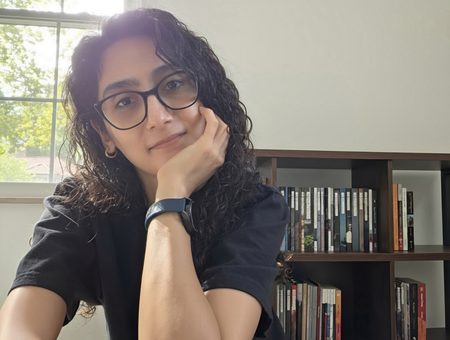
AJ JAVAHERI is an Iranian born and raised literary translator based in St. Louis, working between Farsi and English. She holds an MFA in Literary Translation from the University of Iowa and is currently a PhD student in Comparative Literature, International Writers Track at Washington University in St. Louis.