Public Affairs
November 16, 2012 - By Aleksandar Brezar
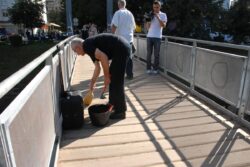
Three weeks ago, Enver Hadžiomerspahić arrived at the Ars Aevi Bridge on Sarajevo’s Miljacka River, followed by a small army of reporters; he was there to mark his resignation as the director of Ars Aevi, the most impressive collection of contemporary art in the Balkans. Instead of giving a speech, Hadžiomerspahić took . . .
Read More
November 12, 2012 - By Zach Savich
This fall’s college freshmen were seven years old when the US invaded Afghanistan. Most don’t remember the protests in the days before the invasion, which, as a college freshman in September 2001, I attended in Seattle. They don’t remember the predictions one heard at those marches—that the Bush administration would soon engineer . . .
Read More
October 4, 2012 - by Jim Hicks
I admit it. I’m an addict. I just can’t stop watching, surfing, and listening to all this stuff. I know it’s vacuous, misdirected, and it’s certainly not good for me, but I do it anyway. Not only did I watch the entire so-called debate last night, I also watched the post-festum cud-chewers . . .
Read More
September 5, 2012 - by Jim Hicks
I assume that you’ve been paying attention lately, and as a result, are suitably outraged, so I won’t have to tell you about Stéphane Hessel. You’ll already know his incredible story: how he moved from Berlin to Paris in 1924, when he was only seven. How, with his father, a German-Jewish writer, . . .
Read More
May 1, 2012 - by Jim Hicks
I wasn’t in Sarajevo during the war; I also wasn’t here for its recent twentieth anniversary. A host of international journalists did return, and witnessed first-hand a very simple, devastating demonstration, staged by the theater director Haris Pasović, as testimony to the years of the Sarajevo siege. 11,541 empty red chairs, many . . .
Read More
February 6, 2012 - By Doug Anderson
Askold Melnyczuk’s story, “Walk With Us,” in the Massachusetts Review Casualty issue, is so skillfully turned you don’t know who the subject is until the end. At the risk of being a spoiler and softening the moment of recognition, I have to say it’s about Lynndie England, the poster girl for Abu Ghraib. But . . .
Read More
December 8, 2011 - by Jim Hicks
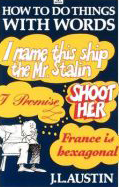
In a famous series of lectures delivered at Harvard in 1955, the philosopher James Langshaw Austin told us something everyone already knew: Language doesn’t just say things, it can also do things. In publication, the book based on these lectures took this point and ran with it. How to Do Things With . . .
Read More
September 21, 2011 - By Jen Marlowe
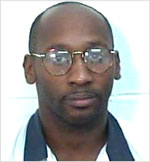
Motivational posters line the hallways en route to the visitation room. Images of rock climbers, an eagle soaring over clouds, a collection of hands of all pigmentation on a basketball, each with an inspirational one-word message: LEADERSHIP, OPPORTUNITY, ACHIEVEMENT, FOCUS, TEAMWORK. Opportunity? Achievement? The irony was almost outrageous. The hallway was in . . .
Read More
September 14, 2011 - by Jim Hicks
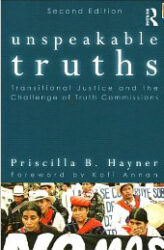
The introductory chapter to Priscilla Hayner’s comparative study of truth commissions begins simply and dramatically. The author quotes an exchange with a Rwandan government officer, the sole survivor from his immediate family. One out of seventeen. The occasion for their conversation was a visit to the church at Nyarubuye, a scene of . . .
Read More
July 13, 2011 - by Jim Hicks
“Stories we tell ourselves about ourselves”… I’ve always liked that phrase, from the anthropologist Clifford Geertz. Even more so because these days I regularly come across suggestions that the self itself may be nothing but story. “Nothing but” – I must insist – is a far cry from “just” or “merely.” Readers of MR, or any . . .
Read More